
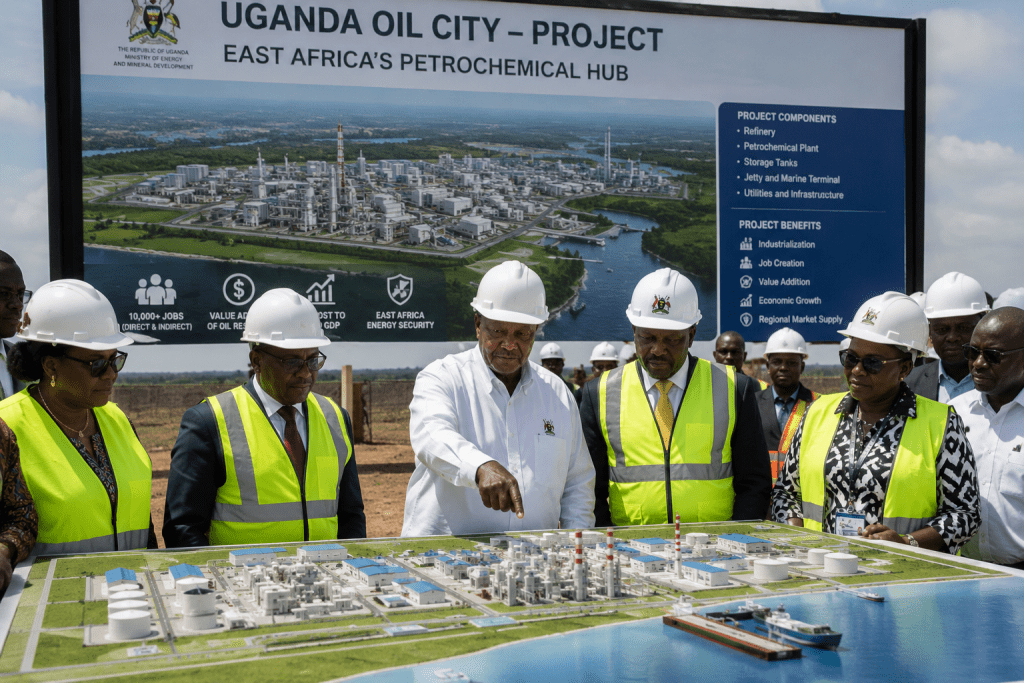
The industrial park is being developed alongside several landmark energy projects, including the East African Crude Oil Pipeline (EACOP), the Uganda Oil Refinery and Kabalega International Airport. Together, these investments are intended to create an integrated energy and manufacturing ecosystem capable of processing Uganda’s crude oil domestically while supplying refined products and industrial inputs to markets across East Africa.
Uganda’s strategy reflects a broader effort to capture more value from its natural resources. Rather than relying primarily on crude oil exports, the government hopes to build industries that manufacture higher-value products such as fertilizers, industrial chemicals, plastics and pharmaceuticals. Policymakers believe this approach will create skilled employment, attract foreign investment and diversify the economy beyond raw commodity exports.
The timing is significant as Uganda moves closer to becoming an oil-producing nation. Construction of the East African Crude Oil Pipeline is in its final stages, with first commercial oil production expected later this year. The pipeline will transport crude from Uganda’s Lake Albert oilfields to the Tanzanian port of Tanga, providing the country with direct access to international energy markets while supporting the growth of related industries at home.
Officials say the industrial park is expected to attract both local and international investors seeking opportunities in manufacturing and energy-related services. Beyond petrochemicals, the development is planned to accommodate logistics companies, engineering firms, research institutions and service providers that support the broader oil and gas value chain. The government expects the concentration of complementary industries to create economies of scale and strengthen Uganda’s competitiveness as a regional industrial center.
Economists argue that the project could have benefits extending well beyond Uganda’s borders. As East African economies continue to industrialize, regional demand for fertilizers, plastics, refined petroleum products and industrial chemicals is expected to grow steadily. By producing these goods locally, Uganda could reduce import dependence, strengthen regional supply chains and expand intra-African trade under the African Continental Free Trade Area.
For Uganda, the development of Hoima represents more than the launch of another industrial park. It signals the country’s ambition to become a regional center for energy-based manufacturing, leveraging its oil resources to build industries capable of generating long-term economic value. If the strategy succeeds, Hoima could emerge as one of East Africa’s most important industrial cities, helping reshape the region’s petrochemical landscape for decades to come.
