
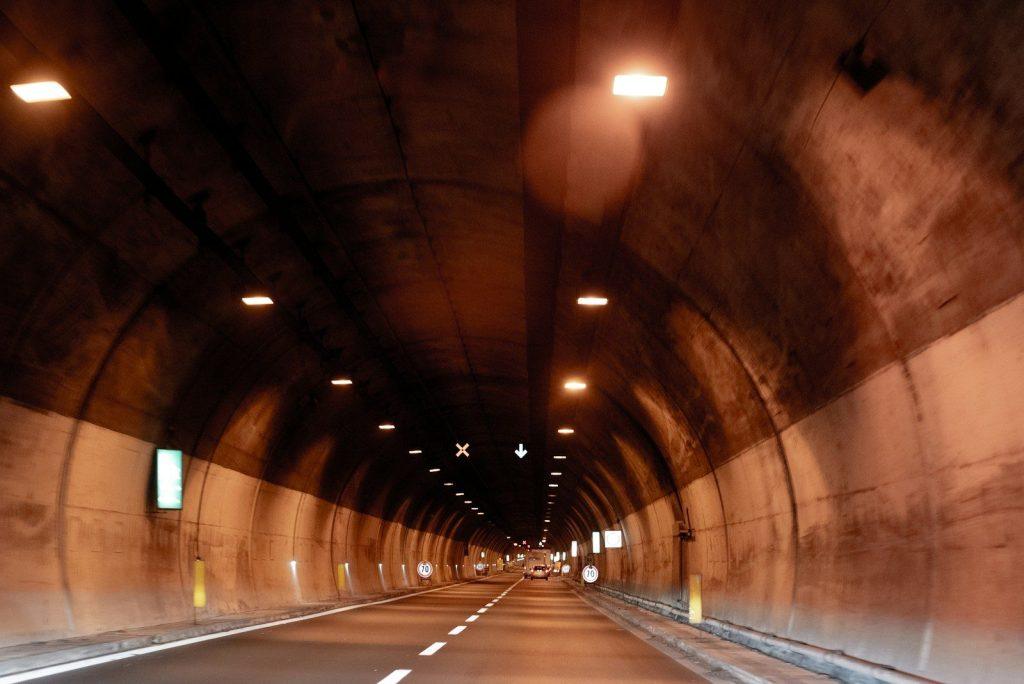
If completed, the tunnel would carry both passenger and freight trains, connecting southern Spain directly to northern Morocco and, by extension, linking European rail networks with Africa’s expanding infrastructure. Officials on both sides have revived technical studies and financing discussions, with construction tentatively targeted for the next decade and completion projected between the mid-2030s and early 2040s.
The project’s significance lies not only in its scale but in its implications. By reducing reliance on maritime routes, it could accelerate trade flows, shorten travel times and reconfigure logistics across the western Mediterranean. Analysts have long described it as a missing link in the Euro-Mediterranean transport corridor, one capable of reshaping how goods and people move between continents.
Yet the Gibraltar tunnel is no longer the only proposal under consideration.
A second, smaller but symbolically significant project has emerged along the Atlantic coast, where Morocco and Portugal are exploring plans for an undersea connection between the two countries. Unlike the rail-focused Gibraltar link, this proposal centers on a road tunnel designed to carry vehicle traffic between North Africa and southern Europe. Early estimates place the cost at more than €800 million, though the final figure will depend on geological conditions and financing arrangements.
Together, the two projects suggest a broader shift in how policymakers are thinking about intercontinental connectivity. For decades, the Mediterranean has functioned as both a bridge and a barrier, facilitating trade while limiting the speed and scale of integration. Fixed links, if realized, would compress that distance in ways that could fundamentally alter regional economics.
Still, both proposals remain at an early stage, and the obstacles are formidable. The Strait of Gibraltar, in particular, presents extreme technical challenges, including seismic activity, deep water and complex geological formations that have delayed the project for decades.
Financing is another uncertainty. Large-scale infrastructure projects of this kind require sustained political commitment and long-term investment, often across multiple governments and economic cycles.
Yet the persistence of the idea is itself telling.
In an era defined by shifting trade routes, energy transitions and geopolitical realignments, the prospect of directly linking Europe and Africa has taken on renewed urgency. What was once a distant aspiration is now being reconsidered as a strategic necessity, a way to anchor two regions more firmly within a shared economic space.
Whether either tunnel is ultimately built remains uncertain. But the renewed push behind them signals something more enduring: that the boundary between Europe and Africa, long defined by water, may not remain so for much longer.
