
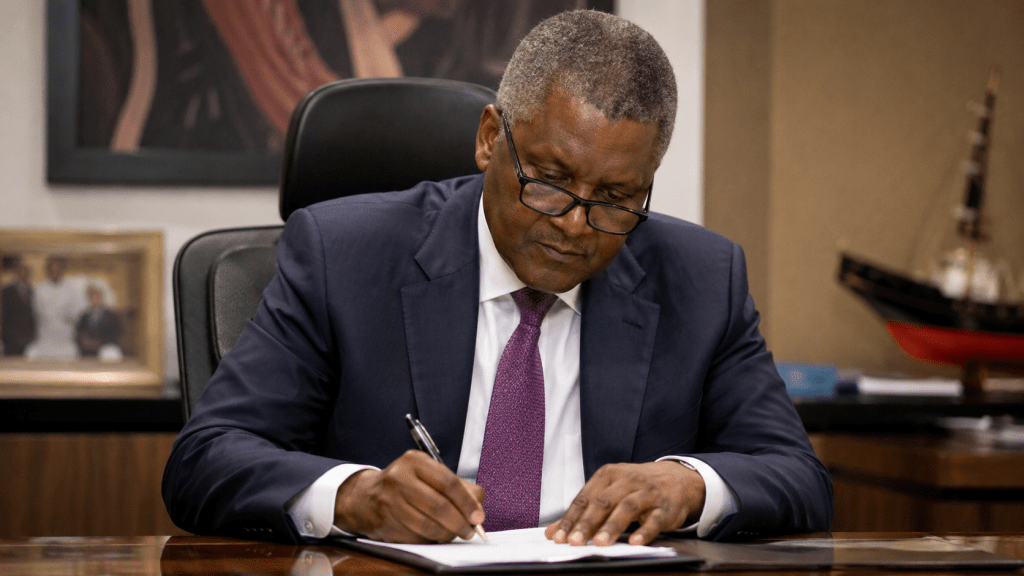
The investment push follows talks between President Hassan and Nigerian billionaire Aliko Dangote, whose industrial group already operates a major cement business in Tanzania. The discussions produced a roadmap for expanding the company’s presence beyond cement into energy, agriculture and logistics, areas that the Tanzanian government considers essential to sustaining faster economic growth.
Fertiliser production is expected to be a particularly important part of the proposed expansion. Tanzania, like many African countries, remains exposed to fluctuations in global fertiliser prices and supply disruptions. A domestic urea plant could reduce dependence on imports while providing farmers with more reliable access to agricultural inputs, supporting higher crop yields and strengthening food security.
Dangote has increasingly made fertiliser production a central part of his broader African investment strategy. His group is also developing a multibillion-dollar fertiliser complex in Ethiopia with planned capacity of three million tonnes of urea annually, alongside supporting infrastructure and an NPK blending facility. The broader strategy reflects an effort to expand local production of agricultural inputs across the continent rather than relying heavily on imports.
The proposed 2,000-megawatt power station could also significantly expand Tanzania’s electricity supply if it proceeds. Reliable power remains essential to the country’s ambitions in manufacturing, mining, processing and large-scale agriculture, and additional generating capacity could help support new factories and industrial zones while reducing pressure on the national grid.
Port development would add another strategic dimension to the investment. Southern Tanzania has access to mineral resources, agricultural production and trade routes serving neighbouring countries, but infrastructure constraints have limited the region’s full commercial potential. Improved port and road connections could lower transport costs while opening new export routes for Tanzanian producers.
The renewed discussions come as East African governments compete to attract some of the continent’s largest private infrastructure investments. Dangote has separately advanced plans for a major refinery in Kenya, with Mombasa emerging as a preferred location because of its deep-water port and sizeable fuel market. The proposed refinery has been estimated at between $15 billion and $17 billion.
Rather than ending Dangote’s interest in Tanzania, the Kenya refinery plan appears to have encouraged a broader conversation about where Tanzania can attract investment in sectors suited to its own resources and development priorities. The proposed fertiliser, power and logistics projects would give the country a different but potentially complementary role in Dangote’s expanding East African industrial network.
For Tanzania, the significance of the discussions extends beyond the individual projects. Large investments in energy, fertiliser and transport could generate employment, strengthen domestic supply chains and encourage further private capital into manufacturing and agriculture. They could also reinforce the country’s position as a trade and industrial gateway serving East and Central Africa.
If the projects advance from proposal to construction, they would represent one of the most significant expansions of Dangote’s business interests in Tanzania. More broadly, they would underscore a growing trend in which African industrial groups are increasingly investing across borders, using local capital and regional markets to build the infrastructure needed for the continent’s next phase of economic growth.
