
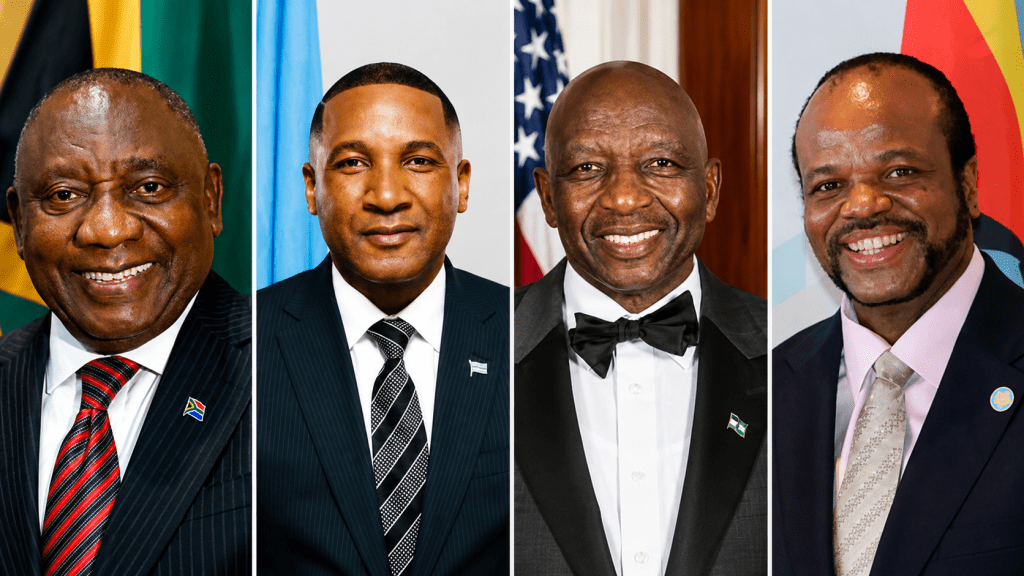
The Southern African Customs Union, known as SACU, represents the five countries as a single customs territory in external tariff negotiations. Established more than a century ago, the bloc maintains a common external tariff, meaning its members will have to develop a coordinated position on the products and concessions included in any agreement with India.
The proposed arrangement will be a preferential trade agreement rather than a comprehensive free trade agreement. That distinction allows the two sides to negotiate reduced or eliminated tariffs on selected products while retaining existing duties in other sectors. No tariffs have changed yet, and the eventual benefits will depend on the products included in the final agreement.
For Southern African exporters, India offers a vast and increasingly important market. Lower tariffs could improve opportunities for minerals, agricultural products and manufactured goods from the region, giving businesses greater access to one of Asia’s largest economies. The negotiations could be particularly important as African countries seek to reduce their reliance on a limited number of traditional export destinations.
The five SACU members bring different strengths to the negotiating table. South Africa has the bloc’s most diversified industrial economy, while Botswana and Namibia are major mineral producers. Lesotho and Eswatini have smaller economies with important manufacturing and agricultural industries. Developing a trade arrangement that reflects these different interests will be central to producing benefits across the customs union.
India could also gain greater access to Southern African markets for pharmaceuticals, machinery, vehicles, textiles and consumer products. Such trade could support businesses on both sides while encouraging deeper investment relationships in sectors ranging from manufacturing and healthcare to technology, mining and agriculture.
The talks come as South Africa, the region’s largest economy, works to broaden its international commercial relationships amid uncertainty surrounding some of its traditional markets. For smaller SACU economies, greater access to India could provide another source of demand for exports and help make their economies more resilient to shifts in global trade.
Lesotho, in particular, has faced uncertainty surrounding employment in its diamond industry and future access to the United States market. More broadly, questions over the future of preferential arrangements such as the African Growth and Opportunity Act have strengthened the case for African exporters to cultivate additional markets in Asia, the Middle East and elsewhere.
The negotiations will extend beyond tariffs. Rules of origin, customs procedures, product standards and safeguards will help determine whether businesses can fully benefit from the agreement. Well-designed rules could make it easier for companies to build regional supply chains, manufacture products across SACU countries and export them competitively to India.
The initiative also reflects the broader expansion of South-South trade. As India’s economy grows and African countries pursue greater industrialization, the relationship between the two regions is increasingly moving beyond traditional commodity trade toward investment, manufacturing, technology and value-added production.
If the negotiations are completed within the planned one-year timetable, the agreement could open another important commercial corridor between Africa and Asia. For South Africa, Namibia, Botswana, Lesotho and Eswatini, the talks represent an opportunity to diversify export markets, attract investment and give Southern African businesses a stronger foothold in one of the world’s fastest-growing major economies.
