
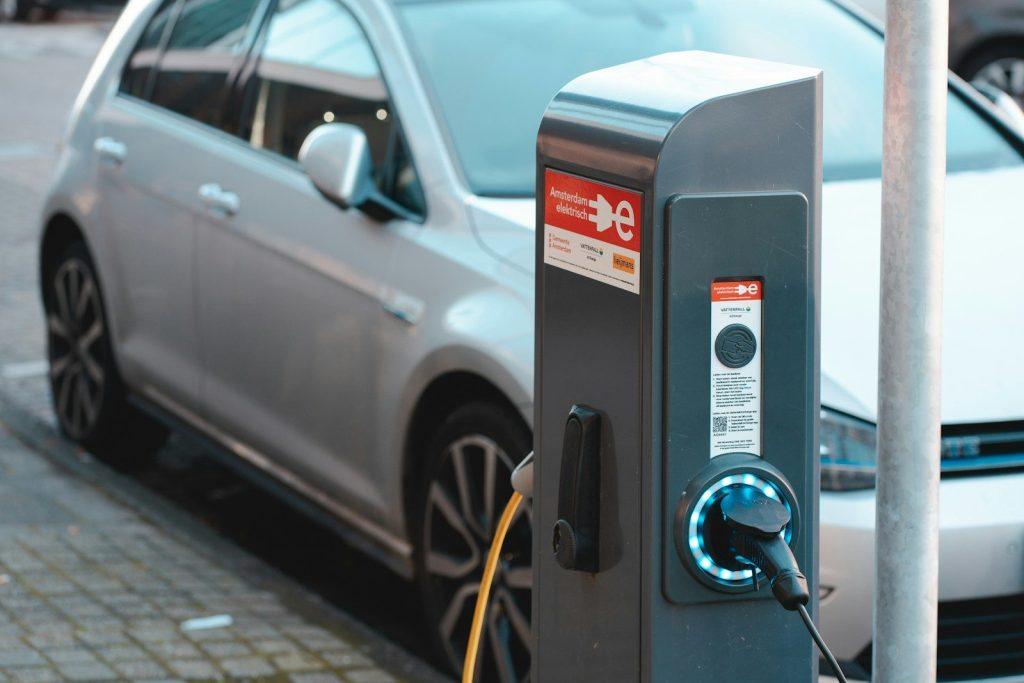
The newly commissioned charging stations are located along the N3 highway, one of South Africa’s busiest freight and passenger routes connecting Johannesburg, the country’s financial center, with the port city of Durban. The corridor serves as a critical artery for regional trade and logistics, carrying substantial volumes of cargo and commercial traffic each year.
Unlike conventional charging infrastructure that relies on the national electricity grid, the new facilities operate entirely off-grid through solar-powered microgrids supported by battery storage systems. The approach is designed to address one of South Africa’s most persistent structural challenges: the instability of its electricity supply.
For years, the state utility Eskom has struggled with aging infrastructure, transmission bottlenecks and recurring power shortages, conditions that have complicated the country’s broader energy transition. Analysts have increasingly questioned whether the existing grid could accommodate widespread electric vehicle adoption without significant upgrades.
The off-grid model seeks to bypass those limitations altogether.
“By building off-grid EV charging infrastructure along key transport corridors like the N3, we are reducing dependence on volatile fuel prices while creating greater energy and transport cost stability over the long term,” Joubert Roux, co-founder and chairman of CHARGE, said during the launch event.
The initiative is being supported through a 100 million rand investment from the Development Bank of Southern Africa, which has positioned the project as part of the country’s broader transition toward sustainable transport infrastructure.
The first two stations, located in the Free State and KwaZulu-Natal provinces, are capable of charging multiple vehicles simultaneously using both standard and fast-charging systems. Company officials say the infrastructure has been designed not only for passenger vehicles, but also with future commercial freight electrification in mind.
That distinction is particularly significant in South Africa, where freight transport remains heavily dependent on diesel-powered trucking along major logistics corridors.
The launch comes amid growing signs of consumer interest in electric mobility. Data from AutoTrader, one of South Africa’s largest digital automotive marketplaces, showed a sharp rise in electric vehicle searches and engagement during the first quarter of 2026. Industry figures also indicate that sales of new energy vehicles increased to more than 16,700 units in 2025, continuing a broader upward trend, although electric and hybrid vehicles still account for a relatively small share of the national market.
Even so, the sector remains in its early stages.
South Africa’s electric vehicle market continues to face several constraints, including high vehicle costs, limited charging infrastructure and inconsistent policy incentives compared with more developed EV markets in Europe, China and North America.
Yet the expansion of off-grid charging infrastructure suggests that the country’s transition may follow a distinct path, one shaped less by centralized utility networks and more by decentralized renewable energy systems.
CHARGE has indicated that it plans to install approximately 60 charging stations nationwide by the end of next year, gradually expanding beyond the N3 corridor into other major transport routes.
The broader implications extend beyond South Africa itself.
As African governments seek to modernize transport systems while navigating unreliable grid infrastructure and rising fuel costs, off-grid charging models may become increasingly relevant across the continent. Renewable-powered charging corridors could offer a framework for electrification in markets where traditional energy systems remain under strain.
For now, the launch along the Johannesburg-Durban route represents more than a transport infrastructure project. It signals an emerging effort to align Africa’s mobility transition with the realities of its energy landscape, using decentralized renewable systems to build the foundations of a future electric economy.
