
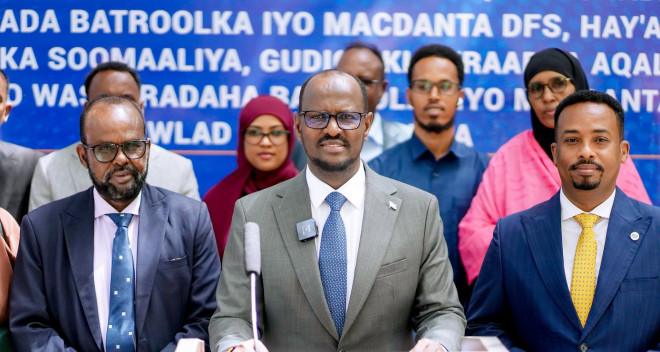
At a press briefing, Federal Petroleum Minister Dahir Shire Mohamed described the accord as an affirmation of national unity and collective decision-making. “We have once again agreed to reject division and take coordinated measures to ensure that petroleum and mineral resources are developed jointly,” he said, adding that all policy decisions will prioritize the interests of the Somali people.
Officials said the discussions focused on aligning federal and state regulatory frameworks, enforcing national laws governing the extractive industries, safeguarding data and operational security, and expanding technical training for workers in the sector. Participants stressed that future activities should serve the public interest and help build confidence across levels of government.
Despite the broad support for the agreement, the absence of key regional actors underscored ongoing political fault lines. The administrations of Puntland and Jubbaland declined to participate, continuing their boycott of engagement with Mogadishu amid wider disputes over governance and resource control.
The talks come at a moment of heightened international interest in Somali energy prospects. Days before the agreement, Turkey’s energy minister announced plans to dispatch a drilling vessel to Somali waters, part of Ankara’s first deep-sea exploration initiative abroad.
Somalia’s offshore oil and gas potential, long touted as a pillar of economic recovery, has been slow to materialize because of insecurity and legal uncertainty over how revenues will be shared. The new accord is intended to create a clearer, cooperative foundation for future exploration and development, and to ensure that any natural wealth benefits citizens across the country.
