
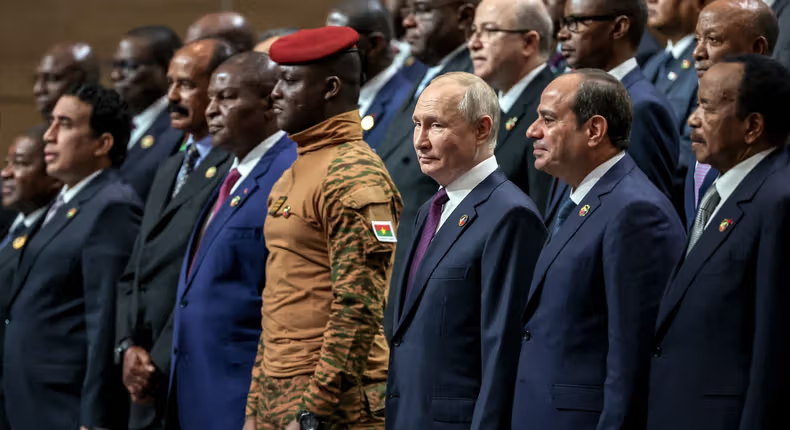
At recent Russia-Africa summits and diplomatic forums, President Vladimir Putin and his envoys have emphasized cooperation framed around sovereign equality and mutual benefit, rejecting “political or other conditions” that, they argue, Western nations attach to aid or trade. Putin’s supporters say the historical memory of Soviet-era solidarity resonates with some African leaders who view past struggles for independence as foundational to national pride and autonomy.
Yet critics of Russia’s current approach caution that invoking the independence era can blur the line between respectful partnership and geopolitical opportunism. In practice, Moscow’s footprint on the continent spans a range of interests, from arms sales and energy cooperation to military training and security agreements. Russian mercenary groups and government-controlled units now operate in parts of the Sahel and Central Africa, a legacy of the Wagner Group’s earlier work, offering security assistance in return for access to natural resources and strategic influence.
Some African governments say they welcome diversified partnerships that provide alternatives to Western dominance and China’s economic clout. Russia’s emphasis on sovereignty and no-strings-attached diplomacy appeals to leaders determined to shape their own development paths. Others remain skeptical, noting that Moscow’s economic investment on the continent still lags far behind that of China, the European Union and the United States, and that military cooperation has at times generated controversy and concern about human rights and local stability.
For ordinary Africans, the resonance of Russia’s message varies widely. Older generations recall the Soviet Union’s support for liberation movements that helped end colonial rule; younger populations, meanwhile, often prioritize jobs, infrastructure and economic opportunity over geopolitical symbolism. Across the continent, many analysts argue that contemporary Russian engagements will be judged less by rhetoric about the independence era and more by tangible outcomes in education, health, investment and security.
As Moscow continues its outreach with appeals to shared history and visions of a multipolar world order, observers say the effort highlights the broader struggle among global powers to define Africa’s economic and strategic future in the 21st century, one that resonates with the hopes and complexities born in the 1960s but is shaped by very different geopolitical realities today.
