
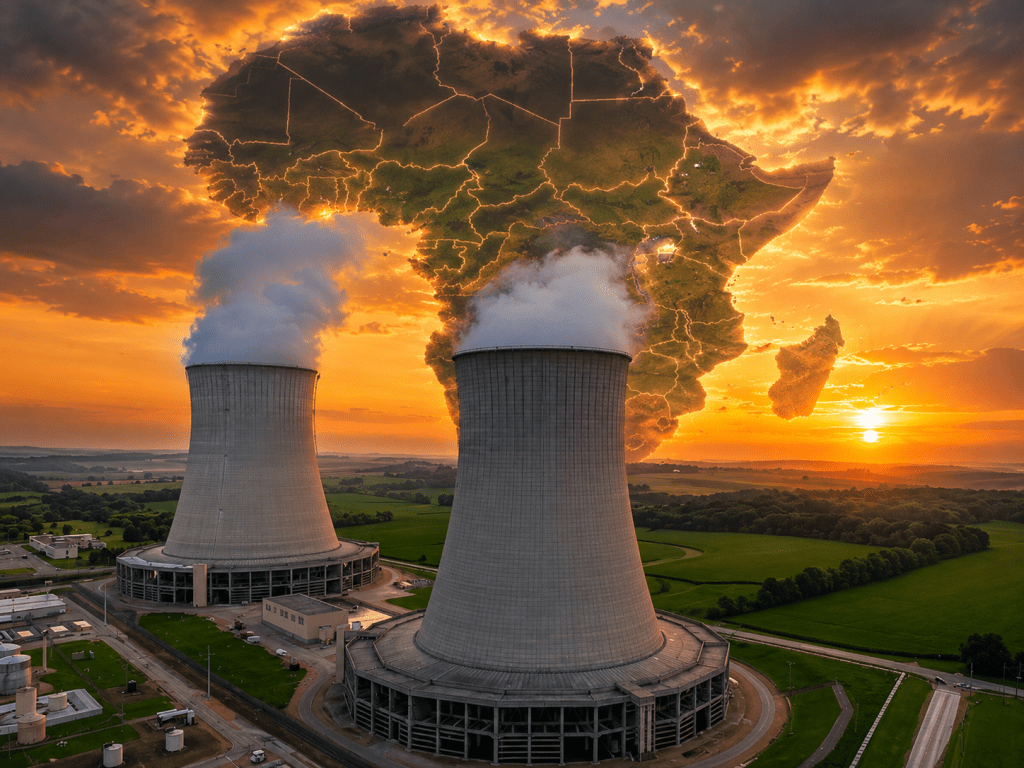
The renewed interest comes as electricity demand continues to rise alongside the rapid expansion of artificial intelligence, data centers, electric vehicles and advanced manufacturing. Unlike wind and solar power, nuclear energy provides a constant supply of electricity regardless of weather conditions, making it an increasingly attractive option for countries seeking dependable baseload power while reducing carbon emissions. Governments across the world are now investing in advanced reactor technologies that promise lower costs, improved safety and faster construction.
Among the most closely watched innovations are small modular reactors (SMRs), which are designed to be built in factories and assembled on site. These next-generation reactors require significantly less land than conventional nuclear plants and can be deployed more quickly to meet growing electricity needs. South Africa has long been involved in SMR research through its earlier Pebble Bed Modular Reactor program, experience that continues to position the country as an important participant in future nuclear development.
The implications extend beyond South Africa. Countries including Ghana, Kenya, Nigeria, Rwanda, Uganda and Egypt are exploring or advancing nuclear energy programs as they seek to diversify electricity generation and support industrial growth. Egypt is already constructing the continent’s largest nuclear power station, while several other African nations are developing the regulatory and technical capacity needed to introduce commercial nuclear power during the next decade.
For South Africa, expanding nuclear energy is also part of a broader effort to strengthen energy security after years of electricity shortages and rolling blackouts. While coal remains the country’s dominant energy source, policymakers increasingly view a balanced mix of nuclear, renewable energy and natural gas as essential to creating a more resilient electricity system capable of supporting long-term economic growth.
The growing global competition to develop advanced nuclear technology is also creating new economic opportunities. Companies specializing in reactor design, fuel production, engineering and nuclear services are positioning themselves to meet what analysts estimate could become a multibillion-dollar African market over the coming decade. As governments prioritize cleaner and more reliable energy sources, nuclear power is re-emerging as a strategic industry capable of supporting industrialization while helping countries meet their climate commitments.
For Africa, South Africa’s nuclear program represents more than a national energy project. It serves as a testing ground for the continent’s broader nuclear ambitions and demonstrates how advanced energy technologies could contribute to economic transformation. As next-generation reactors move closer to commercial deployment, Africa is increasingly positioned not simply as a future consumer of nuclear technology, but as an emerging participant in shaping the industry’s next chapter.
