
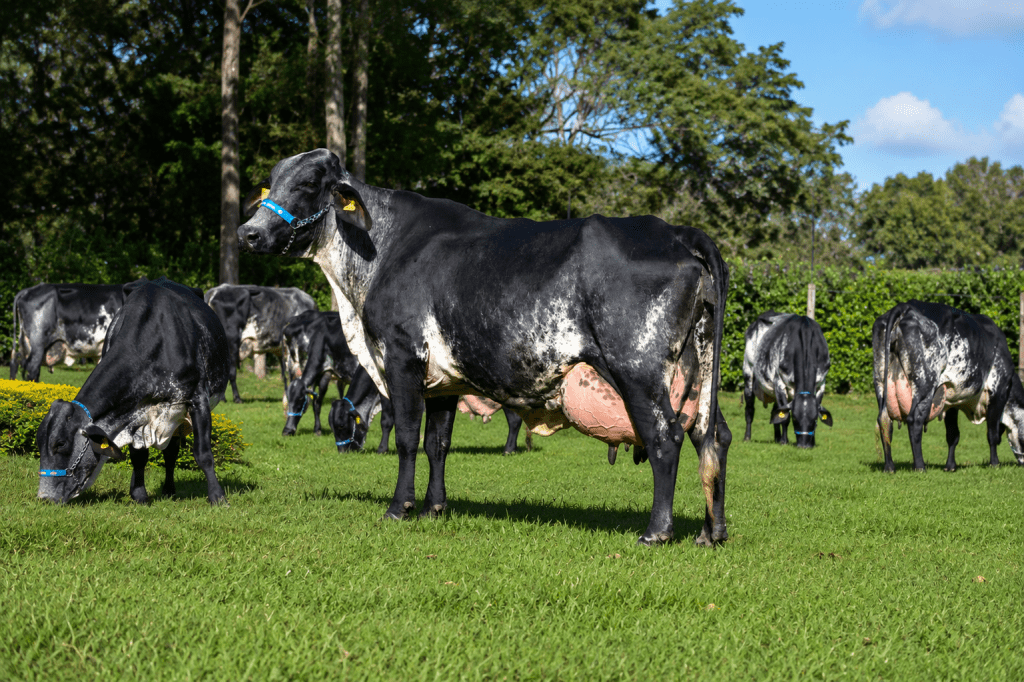
Botswana imports a substantial share of the dairy products consumed within its borders, leaving the country vulnerable to supply disruptions and rising international food prices. Government officials view increased domestic milk production as a strategic priority that will strengthen food security, reduce import costs and create new opportunities for commercial dairy farmers. The cattle importation program forms part of a broader effort to expand agricultural self-sufficiency while diversifying the national economy beyond mining.
The imported cattle are expected to become the foundation of a national breeding program designed to expand Botswana’s dairy herd over time. Rather than relying solely on imported livestock, authorities intend to use the Girolando cattle to improve local genetics through breeding, allowing farmers across the country to benefit from higher-producing animals adapted to Botswana’s environmental conditions. Such programs have been successfully implemented in Brazil, where the breed has become the backbone of the country’s dairy industry.
The initiative also reflects growing agricultural cooperation between Botswana and Brazil. Over the past decade, Brazil has become an increasingly important partner for African countries seeking expertise in tropical agriculture, livestock genetics and commercial farming. Its experience in transforming once-marginal agricultural land into one of the world’s leading food-producing regions has made Brazilian technology and breeding programs particularly attractive to governments looking to modernize their agricultural sectors.
Beyond increasing milk production, the project is expected to generate wider economic benefits. A stronger domestic dairy industry could create employment throughout the value chain, from livestock production and veterinary services to milk processing, transport and retail. Greater local production may also help stabilize dairy prices while improving the availability of fresh milk and dairy products for consumers across the country.
The initiative comes as Botswana intensifies efforts to strengthen agricultural production despite the country’s challenging climate. Alongside investments in livestock, the government has been promoting irrigation, commercial farming and private-sector investment to reduce dependence on imported food and improve national food security. Expanding dairy production is viewed as a key component of that broader strategy.
For Botswana, the arrival of the first Girolando cattle represents more than a livestock import. It signals a long-term investment in agricultural transformation, demonstrating how improved genetics, international partnerships and strategic planning can help build a more productive and self-reliant dairy industry. If the program achieves its objectives, it could serve as a model for other African countries seeking to strengthen domestic food production while reducing reliance on imports.
