
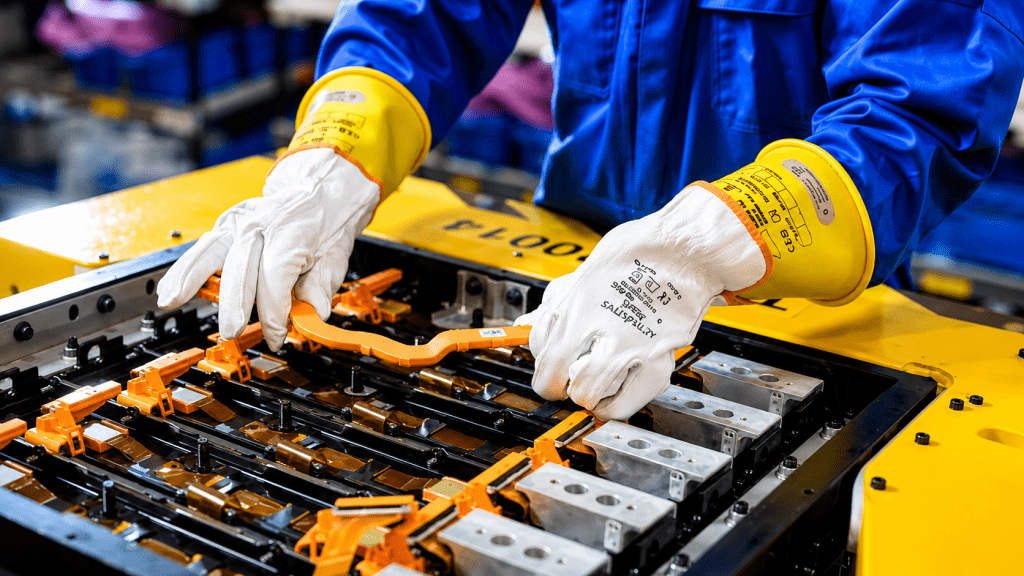
Led by China’s Gotion High-Tech, the project is expected to become the first fully integrated electric-vehicle battery plant in Africa and the wider Middle East and North Africa region. Its first phase will have an annual production capacity of 10 gigawatt-hours, with plans to expand to 100 gigawatt-hours as demand grows.
The African Development Bank also plans to mobilize as much as $162.6 million in additional financing from development partners. That support reflects growing confidence in Morocco’s ability to attract major industrial investment and build the infrastructure needed for large-scale green manufacturing.
Morocco already has one of Africa’s most developed automotive industries. More than 250 companies manufacture vehicles or vehicle components in the country, including Renault and Stellantis, alongside companies from China, Japan, South Korea and the United States. The battery project will deepen that industrial base while reducing dependence on imported technology.
The factory is expected to create more than 600 direct jobs during its first phase and achieve a local industrial integration rate of 70 percent. That target could generate wider opportunities for Moroccan suppliers, engineers and technical workers while supporting the development of domestic manufacturing skills.
The project will also be powered mainly by renewable energy, linking Morocco’s automotive expansion with its broader clean-energy strategy. The country has invested heavily in solar and wind power, giving manufacturers access to lower-carbon electricity at a time when global companies are seeking cleaner supply chains.
For Africa, the factory represents an important shift. The continent has long supplied raw materials used in batteries and clean-energy technology but has captured only a limited share of the value generated through processing and manufacturing. Producing battery cells in Morocco could help establish a stronger African industrial ecosystem around electric vehicles and energy storage.
Battery production is also becoming increasingly important as African countries turn toward electric transport to reduce fuel costs, address shortages and lower emissions. A regional manufacturing base could make batteries and electric vehicles more accessible while reducing reliance on distant suppliers.
The investment strengthens Morocco’s position between Europe, Africa and the Middle East. Its ports, trade agreements, renewable-energy resources and established automotive sector have made it an increasingly attractive destination for manufacturers seeking access to several major markets.
By attracting one of the continent’s most important clean-technology projects, Morocco is demonstrating how African countries can move from exporting resources to producing high-value industrial goods. The new gigafactory is not simply another manufacturing plant; it is a sign that Africa is beginning to claim a larger role in the global transition to electric mobility.
