
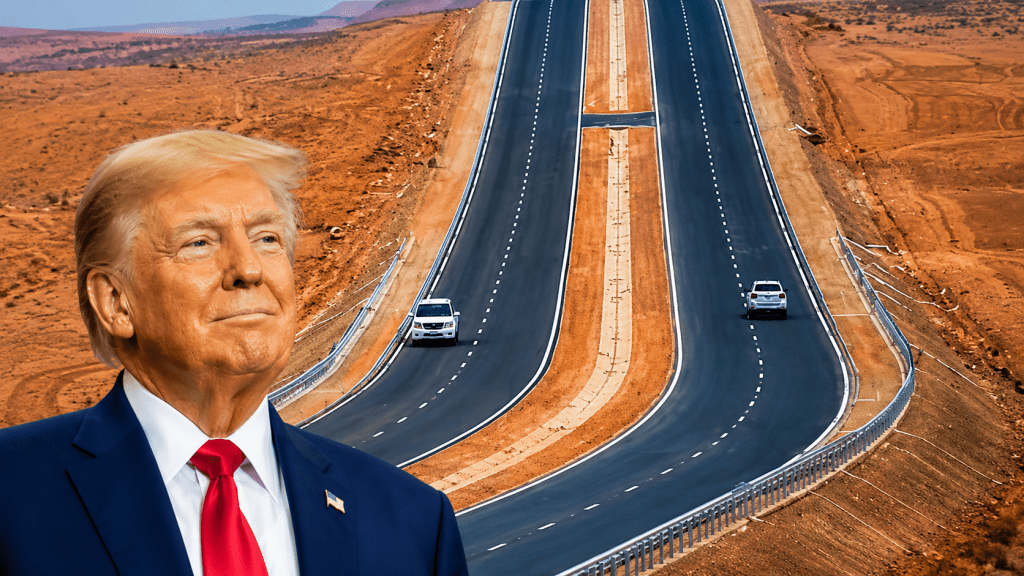
The decision to name the highway after Trump reflects the importance Morocco continues to place on his administration’s 2020 recognition of Moroccan sovereignty over Western Sahara. The territory remains disputed, with Morocco controlling most of the region while the Algeria-backed Polisario Front continues to seek its independence. Much of the expressway crosses the contested territory, giving the project considerable political as well as economic significance.
For Morocco, however, the highway’s central purpose is commercial. Authorities expect it to reduce freight costs, improve road safety and shorten the time required to transport goods between European markets, Moroccan production centers and West African economies. Its completion also strengthens Morocco’s position in regional supply chains at a time when governments and businesses are looking for more reliable trade corridors.
The road will eventually connect with the planned Dakhla Atlantic Port, a multibillion-dollar deep-water facility intended to become a major logistics hub on Africa’s western coast. Together, the port and expressway are designed to move agricultural products, seafood, manufactured goods and minerals more efficiently while attracting investment into transport, tourism and industrial development.
The corridor also supports Morocco’s Atlantic Initiative, which seeks to provide landlocked countries in the Sahel with alternative access to international markets through the Atlantic Ocean. Nations such as Mali, Niger and Burkina Faso have long depended on ports and transport routes controlled by neighboring coastal states, leaving their trade vulnerable to political instability and logistical disruptions.
By offering new connections through its ports and road networks, Morocco is presenting itself as a dependable economic partner to countries across the region. The strategy could deepen the kingdom’s influence in the Sahel while expanding opportunities for Moroccan banks, logistics companies, manufacturers and construction firms seeking growth beyond their domestic market.
The project is equally important to Morocco’s efforts to integrate Western Sahara more closely into the national economy. Large investments in highways, ports and urban development have strengthened commercial links between the territory and the rest of the kingdom, while reinforcing Rabat’s long-standing sovereignty claim over the region.
Naming the highway after Trump may attract the most immediate attention, but its longer-term importance will be measured by the trade and investment it generates. As Morocco continues building transport links toward Europe and deeper into Africa, the Tiznit-Dakhla corridor could become a central part of an emerging Atlantic trade network connecting some of the world’s most established markets with some of its fastest-growing economies.
