
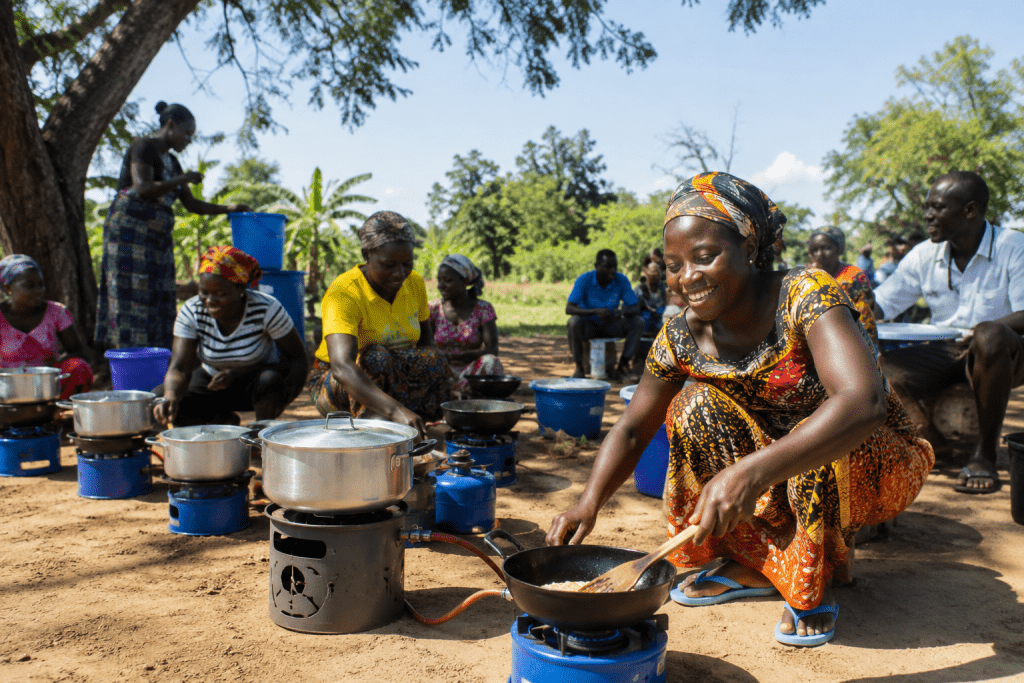
Access to clean cooking remains one of Africa’s most pressing energy and public health challenges. According to the IEA, smoke from traditional cooking methods contributes to an estimated 850,000 premature deaths each year, with women and children bearing the greatest health burden because of prolonged exposure to indoor air pollution. Expanding the use of cleaner alternatives such as liquefied petroleum gas (LPG), ethanol, biogas and electricity is expected to reduce respiratory illnesses while improving the quality of life for millions of households.
The latest commitments reflect growing international momentum behind the clean cooking agenda. Since the Paris summit in 2024, approximately $740 million of previously announced funding has already been deployed across 22 African countries. Governments have also introduced more than 120 new clean cooking policies in over 30 countries, representing about 80 percent of the continent’s population without access to modern cooking solutions. These reforms include incentives for cleaner fuels, investments in energy infrastructure and measures to encourage private-sector participation.
Kenyan President William Ruto, who addressed the meeting, emphasized that financing remains the greatest obstacle to achieving universal access to clean cooking. While governments have demonstrated political commitment, he argued that sustained investment from development institutions, private companies and international partners will be essential to translate policy ambitions into widespread adoption. IEA Executive Director Fatih Birol said the additional funding demonstrates increasing global recognition of clean cooking as a critical development priority, with further commitments expected before the next continental summit.
Alongside the new financing, the IEA launched a Clean Cooking Security Programme designed to strengthen global supply chains for cooking fuels, particularly LPG. The initiative follows disruptions to international shipping routes earlier this year that exposed the vulnerability of fuel supplies passing through the Strait of Hormuz. By improving fuel security and strengthening international cooperation, the program aims to ensure that expanding access to clean cooking is not undermined by future geopolitical or logistical disruptions.
The expansion of clean cooking is expected to generate benefits well beyond public health. Wider adoption of modern cooking technologies can reduce deforestation caused by firewood collection, lower greenhouse gas emissions and free up time for education and income-generating activities, particularly for women who often spend hours gathering fuel. Improved access to reliable cooking fuels also supports broader efforts to achieve universal energy access and sustainable economic development across Africa.
For African governments, the latest funding commitments represent another step toward addressing one of the continent’s most persistent development challenges. As investment continues to grow and policy reforms gain momentum, expanding access to clean cooking has the potential to improve health outcomes, strengthen energy security and enhance the quality of life for hundreds of millions of people while supporting Africa’s broader sustainable development goals.
