
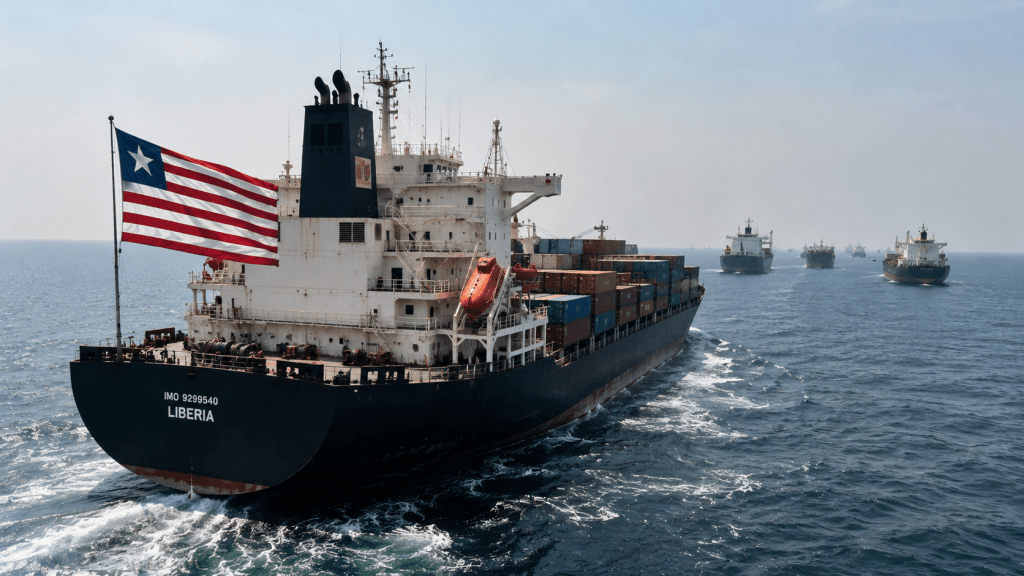
Liberia’s importance became especially visible during recent tensions in the Strait of Hormuz, one of the world’s most critical oil transit corridors. As security risks rose and commercial vessels continued moving through the waterway, Liberia’s flag appeared on several major oil tankers, underscoring the country’s quiet but significant presence in global energy logistics.
According to shipping data cited in the report, Liberia’s registry includes more than 5,650 vessels with a combined 277 million gross tons, representing about 17 percent of the world’s ocean-going fleet. That makes Liberia one of the largest ship registries globally and a preferred flag for owners of crude oil tankers, liquefied natural gas carriers, bulk carriers, container ships and other commercial vessels.
The appeal of the Liberian flag is rooted in a combination of regulatory efficiency, international recognition and commercial flexibility. Shipowners often look for registries that offer credible maritime oversight while allowing them to operate competitively across global markets. Liberia has built its reputation by providing that balance, positioning itself as a trusted registry for some of the world’s most important shipping companies.
The system has also given Liberia a source of international relevance far beyond the size of its domestic maritime industry. Registry fees and related services contribute to public revenue, while the country’s role as a flag state gives it a voice in global shipping regulation and maritime safety discussions. In an industry where legal registration determines a vessel’s nationality, Liberia has turned administrative capacity into strategic influence.
Still, the model is not without scrutiny. Open registries have long faced questions over labor standards, safety enforcement and accountability when vessels are involved in accidents or disputes. For Liberia, maintaining credibility depends on ensuring that its registry meets international maritime standards while responding effectively to growing expectations around transparency, environmental compliance and vessel safety.
Liberia’s rise as a shipping power reflects the unusual ways small countries can shape global trade. By building one of the world’s most competitive maritime registries, the country has placed its flag on vessels that move oil, gas, food and manufactured goods across oceans. In doing so, Liberia has become a major player in global shipping without owning the ships that carry its name.
