
Despite the port’s deep harbor and strategic location, attracting sufficient cargo and private investment has proved difficult. Its profile rose temporarily when regional conflict disrupted established shipping routes and redirected some cargo toward Lamu, but analysts cautioned that the port would require permanent industries, stronger regional trade and supporting infrastructure to become commercially sustainable.
The planned Dangote refinery could provide that missing commercial foundation. President William Ruto has appointed a government team led by Deputy President Kithure Kindiki to work with investors and prepare for a groundbreaking ceremony expected later in the year. The administration has presented the project as one of the largest private investments in Kenya’s history and a potential catalyst for economic growth along the northern coast.
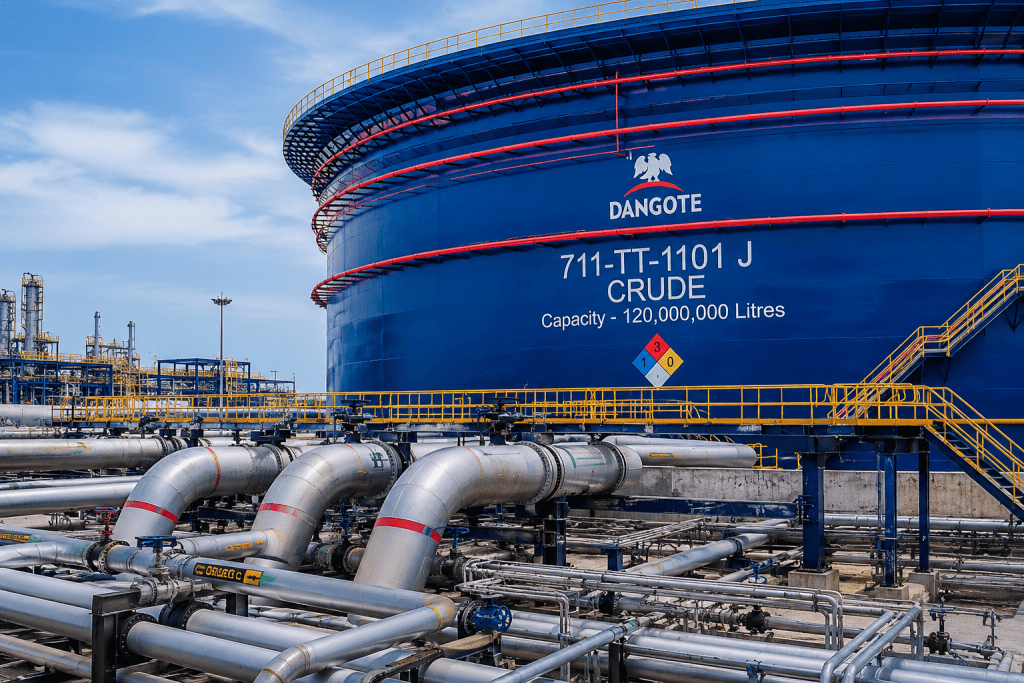
Dangote Industries is expected to finance the project through internally generated funds, bond offerings and proceeds from a planned initial public offering. The refinery would have the capacity to process about 700,000 barrels of crude oil a day, making it the largest facility of its kind in East Africa and comparable in scale to Dangote’s existing refinery in Lagos.
The project is also intended to reduce East Africa’s dependence on imported refined petroleum products. Countries across the region rely heavily on fuel supplied from the Gulf, leaving them vulnerable to geopolitical conflict, shipping disruptions and sudden price increases. Regional economies collectively spend hundreds of millions of dollars each month importing petrol, diesel, liquefied petroleum gas and other refined products.
Those vulnerabilities became more visible when conflict disrupted traffic through the Strait of Hormuz and pushed fuel prices higher across East Africa. Kenyan officials argue that a regional refinery would provide greater energy security by reducing exposure to overseas supply shocks while allowing more value to be retained within the continent.
The location of the proposed refinery has nevertheless been the subject of regional political debate. Earlier discussions considered Tanga in Tanzania, where the East African Crude Oil Pipeline is expected to deliver oil from Uganda’s Albertine basin. The proposal created diplomatic tension after Kenya publicly discussed the site before formally consulting Tanzania.
Lamu later emerged as the stronger option because of its deep-water port and Kenya’s established transport and market infrastructure. Dangote’s experience with the Lagos refinery has also demonstrated that large refining projects require reliable crude supplies, a sizeable consumer market and efficient systems for transporting finished products.
For Lamu, the investment could create jobs, attract related industries and stimulate the development of roads, storage facilities and logistics services. Local officials have urged residents and political leaders to support the project, arguing that it could transform the county’s economic fortunes while strengthening Kenya’s role in regional trade.
The refinery alone would not complete the Lapsset corridor, whose original vision remains far from realized. It could, however, provide the commercial momentum needed to revive a project that has long struggled to attract the investment and cargo volumes required to justify its scale. If the plan proceeds, Lamu could evolve from an underused port into one of East Africa’s most important energy and transport gateways.
