
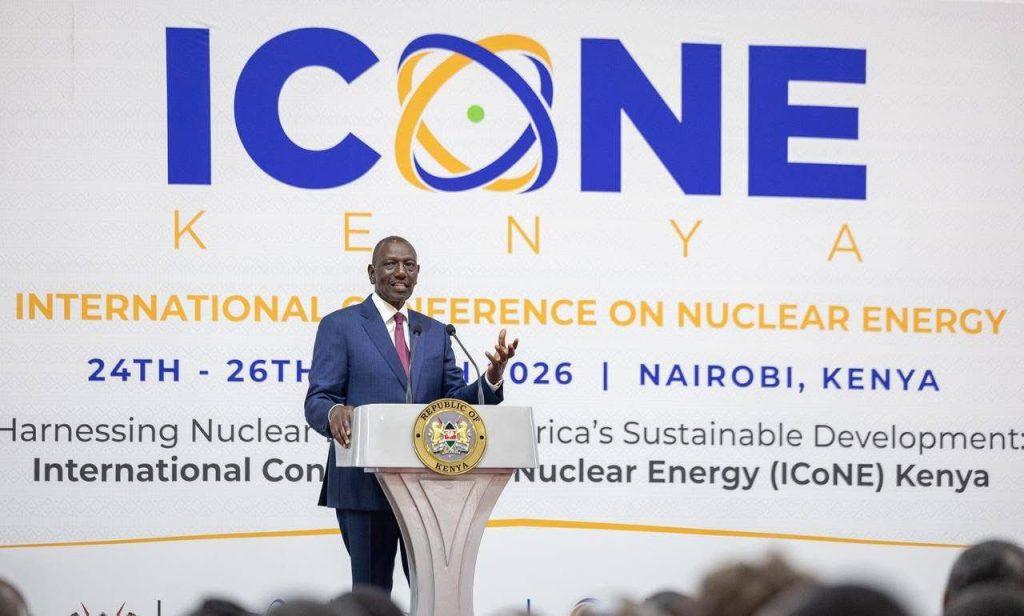
The project, estimated to cost about 500 billion Kenyan shillings (roughly $3.8 billion), represents one of the most ambitious infrastructure undertakings in the country’s history. It is intended to provide a stable baseload power source capable of supporting industrial growth and meeting rising electricity demand driven by population growth and urbanization.
For Kenyan policymakers, nuclear energy has increasingly come to be seen as a necessary complement to renewable sources. While the country has made notable progress in expanding geothermal and wind capacity, officials argue that those systems alone cannot guarantee the consistent supply required for large-scale manufacturing and economic expansion.
Construction is expected to begin in March 2027, following years of preparatory work that has included site selection, regulatory development and technical capacity building. The Nuclear Power and Energy Agency, which is overseeing the program, has worked alongside Kenya Electricity Generating Company, the state utility that will ultimately operate the plant.
The choice of Siaya County, near Lake Victoria, reflects a combination of technical and logistical considerations, including access to water resources and grid connectivity. But the decision has also drawn scrutiny, with some local leaders and community groups raising concerns about environmental risks and public safety, debates that have accompanied nuclear projects in many parts of the world.
Government officials have sought to address those concerns through a series of public consultations, emphasizing that the project will be developed in line with international safety standards set by the International Atomic Energy Agency.
If completed on schedule, the plant is expected to begin generating electricity in the early 2030s, marking Kenya’s entry into a small but growing group of African countries exploring nuclear power as part of their energy mix.
For the Ruto administration, the initiative is as much about long-term positioning as it is about immediate supply. By investing in nuclear energy, officials hope to anchor a future in which Kenya can sustain industrial growth, reduce reliance on fossil fuels and secure a more predictable energy base.
Whether that ambition is realized will depend on the government’s ability to navigate the technical, financial and political complexities that have defined nuclear projects worldwide. For now, however, the plan signals a clear shift in Kenya’s energy policy, one that looks beyond traditional sources and toward a more diversified, and potentially transformative, power future.
