
“The uncertainty that had previously engulfed the sector will now give way to renewed confidence and expansion,” Lee Kinyanjui, Cabinet Secretary for Investments, Trade and Industry, said in a statement. He added that Kenya intends to expand exports beyond textiles and apparel to deepen job creation and broaden wealth generation under the renewed framework.
Kenya’s textile and apparel industry, centered in Export Processing Zones, directly employs more than 80,000 people and supports roughly 250,000 jobs when indirect employment is counted, government figures show. Those jobs, many of which were held by women, were at risk after AGOA’s initial expiry, which subjected exports to punitive tariffs and stifled demand.
Trade officials said the extension would also help stabilize investments that stalled amid uncertainty late last year. In 2024, Kenya shipped an estimated $470 million in apparel and textiles to the United States under AGOA, a roughly 19 percent increase over the previous year.
The legislation awaiting Senate approval includes provisions to refund duties already paid on qualifying goods shipped after the agreement’s lapse, a concession that traders say will provide immediate financial relief.
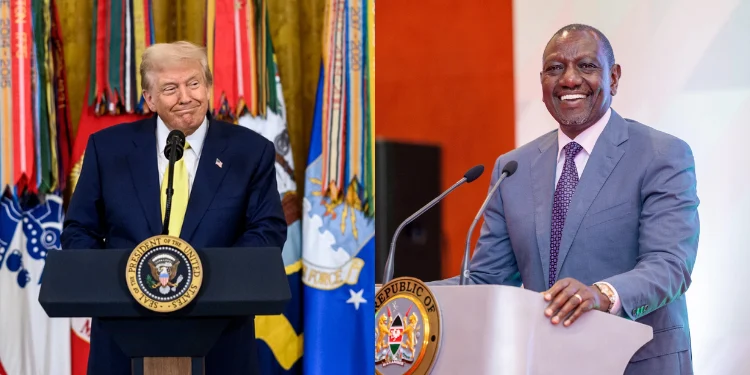
The extension signals broader efforts by Kenyan leaders to strengthen economic ties with the United States, even as the nation explores additional bilateral trade agreements. Discussions on such pacts, officials said, are ongoing and could open new sectors to U.S. markets. President William Ruto raised the issue during a recent visit to Washington, expressing hope that deeper cooperation could fuel growth on both sides.
Economists caution that sustained gains will depend not only on maintaining preferential access but also on boosting productivity and diversifying Kenya’s export base. Still, for manufacturers and workers alike, the three-year extension represents a significant vote of confidence in an economic partnership that has shaped Kenya’s export landscape for a generation.
