
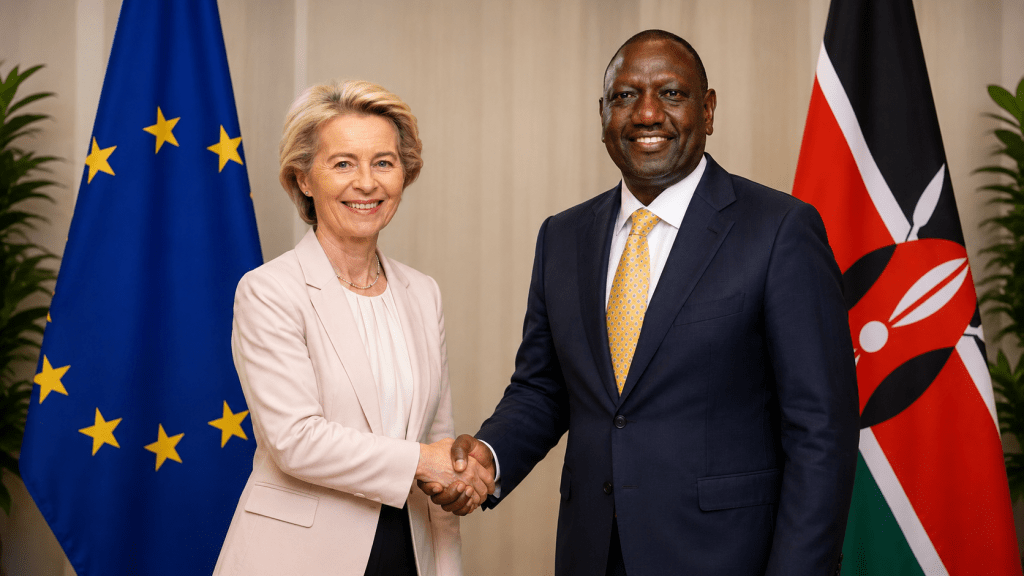
Outgoing European Union Ambassador to Kenya Henriette Geiger attributed the growth in trade to increased investment in value addition and more aggressive marketing by Kenyan exporters. Rather than relying primarily on raw commodity exports, many businesses have expanded into processed and higher-value products, enabling them to capture greater returns while meeting evolving consumer preferences in Europe. The shift has also strengthened Kenya’s position as a supplier of premium agricultural products to international markets.
The agreement represents a significant milestone in Kenya’s trade policy. As the first East African Community member to fully implement the EPA with the European Union, Kenya has secured long-term certainty for exporters whose businesses depend heavily on uninterrupted access to European markets. Government officials argue that the arrangement provides a stable framework for attracting investment, expanding manufacturing and creating employment in export-oriented industries.
Beyond agriculture, policymakers expect the partnership to encourage greater investment in manufacturing, logistics and industrial processing. Improved market access is expected to incentivize companies to establish production facilities in Kenya, allowing them to benefit from preferential access to Europe while serving regional markets through the African Continental Free Trade Area. Analysts believe this combination of global and regional trade opportunities could strengthen Kenya’s position as a manufacturing and export hub in East Africa.
The trade gains also reflect a broader effort by Kenya to diversify its export base and reduce dependence on traditional commodity markets. By expanding exports of processed foods, textiles and manufactured goods, the country aims to generate higher foreign exchange earnings while making its economy more resilient to fluctuations in global commodity prices. Increased private-sector investment has been central to that strategy, with businesses responding to improved access to one of the world’s largest consumer markets.
While the early results have been encouraging, business leaders say continued success will depend on maintaining competitiveness through improved infrastructure, lower production costs and greater compliance with international quality standards. Expanding transport networks, strengthening cold-chain logistics and supporting small and medium-sized exporters are viewed as essential to ensuring that more Kenyan businesses can benefit from the agreement.
For Kenya, the 20 percent increase in trade represents more than a short-term commercial achievement. It signals the growing value of strategic trade partnerships in driving economic growth, expanding exports and attracting investment. As the EPA continues to mature, the agreement could play an increasingly important role in positioning Kenya as one of Africa’s leading export economies and a gateway between European and regional markets.
