
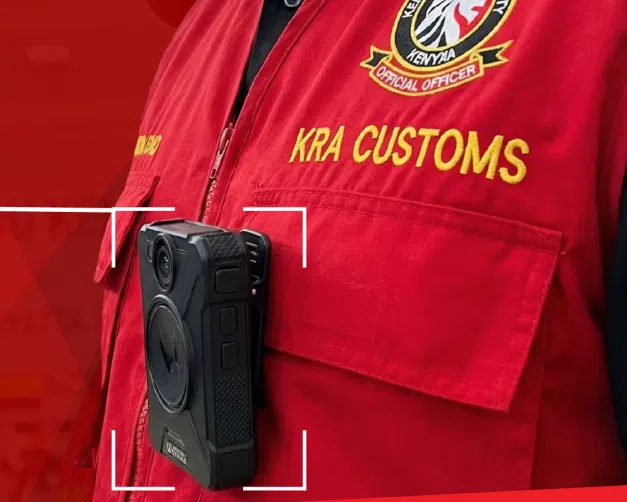
For many travelers and importers, encounters with customs officials can shape their first impression of the country’s institutions. When disagreements arise over inspections or duties, investigations often rely on conflicting accounts from the officers involved and the members of the public they encounter. Authorities say the introduction of body cameras is meant to create an objective record of those exchanges.
The devices, worn by officers as they carry out inspections and clear passengers or cargo, capture real-time footage that can later be reviewed by supervisors or investigators. The recordings are expected to help authorities determine what occurred during disputed interactions while also discouraging misconduct.
Officials at the tax authority say the program forms part of a broader effort to modernize Kenya’s customs operations and restore public confidence in the agency’s work. Border posts and airports have long been viewed as vulnerable points for illicit payments and irregular practices, concerns that have periodically drawn criticism from businesses and travelers alike.
Humphrey Wattanga, the commissioner general of the Kenya Revenue Authority, described the initiative as a practical step toward improving transparency within the institution. By documenting encounters between officers and the public, he said, the agency hopes to ensure that inspections are carried out in a manner that is both professional and accountable.
The rollout begins at Jomo Kenyatta International Airport, where traffic has grown steadily as Nairobi strengthens its position as East Africa’s leading aviation hub. The airport handles millions of passengers each year and serves as a key entry point for regional trade.
Kenyan authorities say the cameras will eventually be introduced at other border points, reflecting a wider effort to modernize customs enforcement as the country seeks to improve revenue collection and strengthen oversight of goods entering and leaving its borders.
For now, the technology represents a small but visible shift in how government officers conduct their work at the front lines of international travel. At the airport’s inspection counters and cargo terminals, the routine exchanges between officials and the public will increasingly take place under the watchful lens of a camera.
