
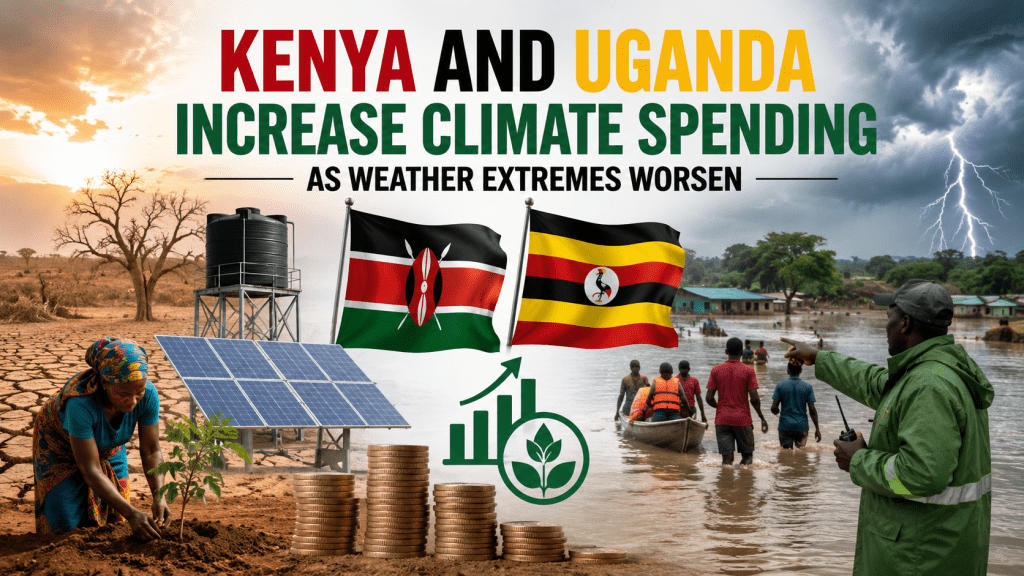
Kenya’s budget places particular emphasis on expanding water infrastructure, restoring degraded ecosystems and strengthening flood control measures. Funding has been directed toward dam construction, irrigation projects, watershed conservation and climate-smart agriculture, with policymakers seeking to reduce the country’s vulnerability to recurring droughts while improving water security for households, farmers and industries. Officials argue that investing in resilience today will lower the long-term costs of disaster response and economic recovery.
Uganda has adopted a similar approach by increasing spending on environmental conservation, water resource management and disaster preparedness. The government plans to improve drainage systems, protect wetlands and strengthen early warning systems as part of a broader strategy to reduce the impact of increasingly frequent extreme weather events. Investments in climate-resilient infrastructure are also intended to safeguard agricultural production, which remains the backbone of the country’s economy and a major source of employment.
The growing financial commitment reflects a broader recognition that climate change is becoming an economic issue as much as an environmental one. Across East Africa, extreme weather has disrupted transport networks, damaged public infrastructure and reduced agricultural productivity, placing additional pressure on government finances. As climate-related disasters become more frequent, policymakers are increasingly viewing adaptation as an investment in long-term economic stability rather than simply an emergency response.
Climate experts have welcomed the higher allocations but caution that public funding alone will not be enough to address the scale of the challenge. They argue that greater private-sector participation, stronger regional cooperation and increased international climate finance will be essential to support large-scale adaptation projects. Improved coordination among governments, development partners and local communities is also expected to play a critical role in strengthening resilience across the region.
The investments align with a growing regional emphasis on building climate-resilient economies. Both Kenya and Uganda are pursuing policies that integrate environmental sustainability into national development planning, recognizing that stronger infrastructure, better water management and more resilient agricultural systems are essential for sustaining economic growth in an era of changing weather patterns. The initiatives also support broader efforts to achieve food security while protecting communities from future climate shocks.
For Kenya and Uganda, the expanded climate budgets represent more than an increase in public spending. They signal a strategic shift toward preparing for a future in which floods and droughts are expected to become more frequent and more costly. As East Africa continues to confront the realities of climate change, investments in resilience are increasingly being viewed as essential to safeguarding economic development, protecting livelihoods and ensuring sustainable growth for future generations.
