
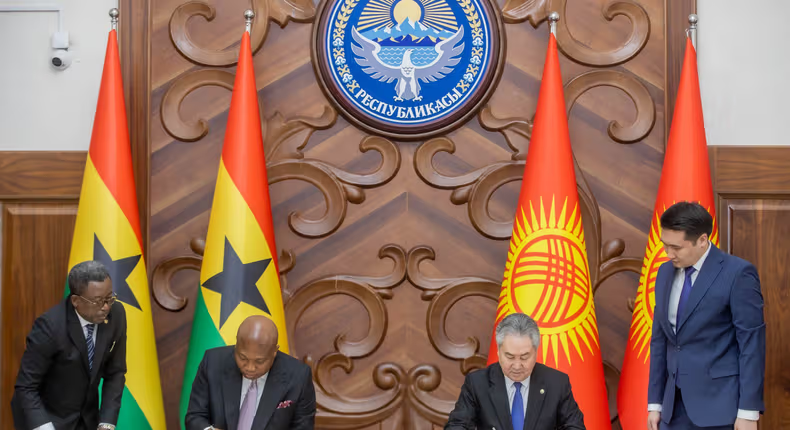
For Ghana, the arrangement represents more than a technical easing of travel restrictions. It reflects a broader effort to diversify its diplomatic and economic relationships at a time when countries across Africa are seeking new partners beyond their established spheres of influence.
Under the terms of the agreement, government officials from both countries will be able to travel without visas, with discussions already underway to extend the policy to ordinary passport holders in the future. The two governments also agreed to establish formal channels for political consultations, a step intended to give structure to what has until now been a limited bilateral relationship.
The visit itself carried symbolic weight. Ghanaian officials described it as a historic milestone, underscoring the country’s intention to engage more directly with regions that have traditionally seen little diplomatic overlap with Africa.
Economic cooperation, particularly in the mining sector, emerged as a central focus of the discussions. Ghana is Africa’s largest gold producer, while Kyrgyzstan is home to one of Central Asia’s most significant gold operations. Officials from both sides pointed to the potential for collaboration in resource development, as well as in trade and technical exchange.
The agreement also comes as Ghana seeks to expand the global mobility of its citizens and deepen its participation in international trade networks. In recent months, officials have emphasized visa liberalization as a tool for strengthening economic ties and improving access for businesses and investors.
For Kyrgyzstan, the partnership offers an opportunity to build new connections with African economies at a time when Central Asian countries are increasingly looking to diversify their external relationships.
While the immediate impact of the visa waiver may be limited to official travel, its broader significance lies in the signal it sends. For both countries, the agreement marks the beginning of a relationship that extends beyond multilateral forums and into a more direct and structured engagement.
Whether that engagement evolves into sustained economic cooperation will depend on what follows. But for now, the agreement stands as an early indication of how emerging economies are reshaping their diplomatic maps, reaching across regions once considered distant, in search of new partnerships.
