
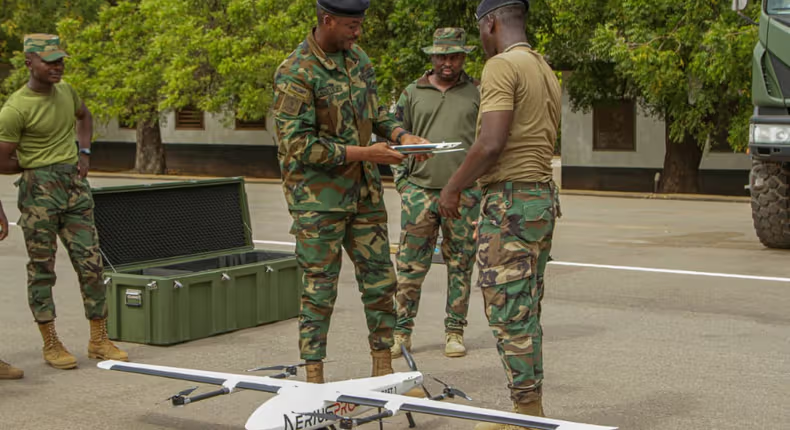
Unlike commercial quadcopters, the AeriusPro is a fixed-wing vertical take-off and landing (VTOL) unmanned aerial vehicle, allowing it to rise from rough terrain without prepared runways before transitioning to more efficient forward flight. This hybrid design gives Ghanaian commanders longer aerial endurance and faster cruising speeds than typical surveillance drones.
Officials said the drone’s deployment is part of a broader effort to bolster the military’s ability to survey remote and rugged regions where ground patrols can be slow or vulnerable to ambush. The aircraft’s cameras and sensors are connected to an advanced command and control system that streams real-time video and telemetry to operators, enabling rapid assessment of potential threats.
“Where terrain is difficult and threats emerge quickly, having an eye in the sky is a force multiplier,” an officer familiar with the program said, speaking on condition of anonymity.
The introduction of a homegrown UAV reflects a growing emphasis across Africa on locally developed technologies to address security concerns without relying solely on foreign suppliers. In Ghana’s case, the development of the AeriusPro follows earlier government and private initiatives to adopt drone technologies for other purposes, including maritime surveillance and crime monitoring.
However, analysts say integrating these systems presents challenges. The military must balance the costs of maintenance, pilot training and data infrastructure with operational needs, while navigating broader questions about privacy and airspace regulation. As with any technology that collects real-time imagery, clear guidelines on data use and civilian oversight will be critical if the program expands.
For now, Ghana’s homegrown drones are patrolling corridors that once could only be assessed by patrol vehicles or soldiers on foot, a change that military leaders hope will improve response times and strengthen national security in the face of evolving threats.
