
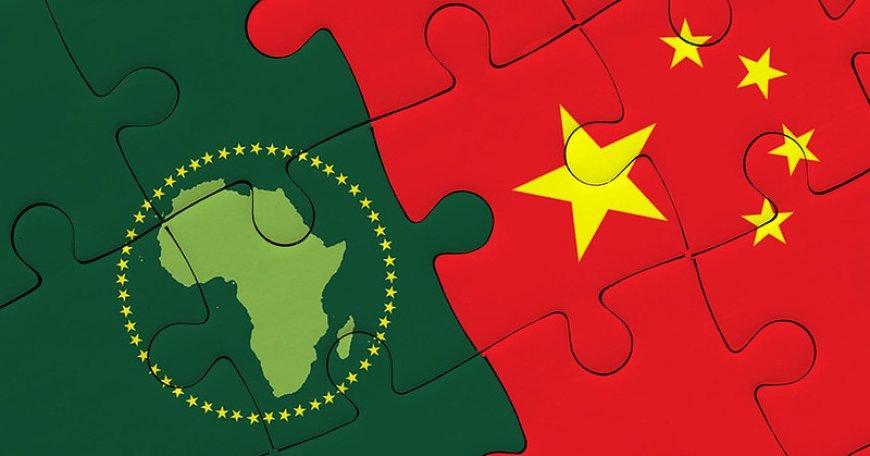
The policy, which took effect on May 1, applies to all African countries that maintain diplomatic relations with Beijing, with the exception of Eswatini, which continues to recognize Taiwan diplomatically. Under the arrangement, African exports ranging from agricultural goods and textiles to minerals and manufactured products can now enter the Chinese market without tariff barriers.
For China, the move is both economic and strategic.
Already Africa’s largest trading partner, Beijing has steadily deepened its presence across the continent through infrastructure financing, industrial partnerships and commodity trade. The new tariff policy further strengthens China’s positioning as a central economic partner for African countries at a time when many governments are seeking to diversify export destinations and reduce dependence on traditional Western markets.
The timing is particularly notable.
Since returning to office, U.S. President Donald Trump has reintroduced broad tariff measures affecting multiple trading partners, including African economies. Several African exporters have faced rising barriers to access in the American market, prompting governments and businesses to accelerate efforts toward trade diversification.
South Africa, for example, recently intensified trade discussions with Beijing after facing increased tariff pressures from Washington on key exports.
For African leaders, China’s expanded market access presents both opportunity and challenge.
The immediate appeal is clear: tariff-free access to a consumer market of more than 1.4 billion people. Agricultural exporters, mining companies and manufacturers across Africa stand to benefit from lower trade barriers and potentially greater export competitiveness in China. Products such as cocoa, coffee, citrus fruits, wine, sesame and processed agricultural goods are among those expected to gain improved market access.
Yet economists caution that tariff reductions alone may not automatically translate into transformative export growth.
Many African countries continue to face structural constraints, including weak logistics networks, limited industrial processing capacity and non-tariff barriers such as strict phytosanitary standards. Analysts note that without substantial investment in infrastructure, manufacturing and value addition, many economies may struggle to fully capitalize on expanded access to Chinese markets.
“There are still significant barriers beyond tariffs,” Cobus van Staden of the China-Global South Project said in comments referenced in recent reporting, pointing to transport limitations and export standards that continue to affect trade flows.
The issue reflects a broader reality confronting Africa’s economic transformation.
While the continent possesses abundant agricultural resources, mineral reserves and a rapidly expanding labor force, many economies remain heavily reliant on raw commodity exports. Policymakers increasingly argue that long-term gains will depend not simply on access to foreign markets, but on the ability to industrialize, process goods locally and move higher up global value chains.
China’s tariff policy may therefore serve less as a complete solution than as an opening — one that could accelerate industrial growth if matched by domestic reforms and infrastructure investment.
The broader geopolitical implications are equally significant.
China has increasingly positioned itself as a defender of globalization and South-South cooperation, contrasting its trade policies with the rising protectionism seen in parts of the West. African governments, meanwhile, are navigating a more fragmented global economic order in which strategic partnerships are becoming increasingly diversified rather than concentrated around a single bloc.
For Beijing, strengthening economic ties with Africa also carries long-term strategic value. The continent remains central to China’s access to critical minerals, future consumer markets and infrastructure expansion linked to the Belt and Road Initiative.
For Africa, however, the larger question may be how to convert growing geopolitical attention into sustained economic transformation.
The removal of tariffs opens a door. Whether African economies can fully pass through it may ultimately depend on their ability to strengthen production, expand industrial capacity and build competitive export industries capable of meeting the demands of global markets.
