
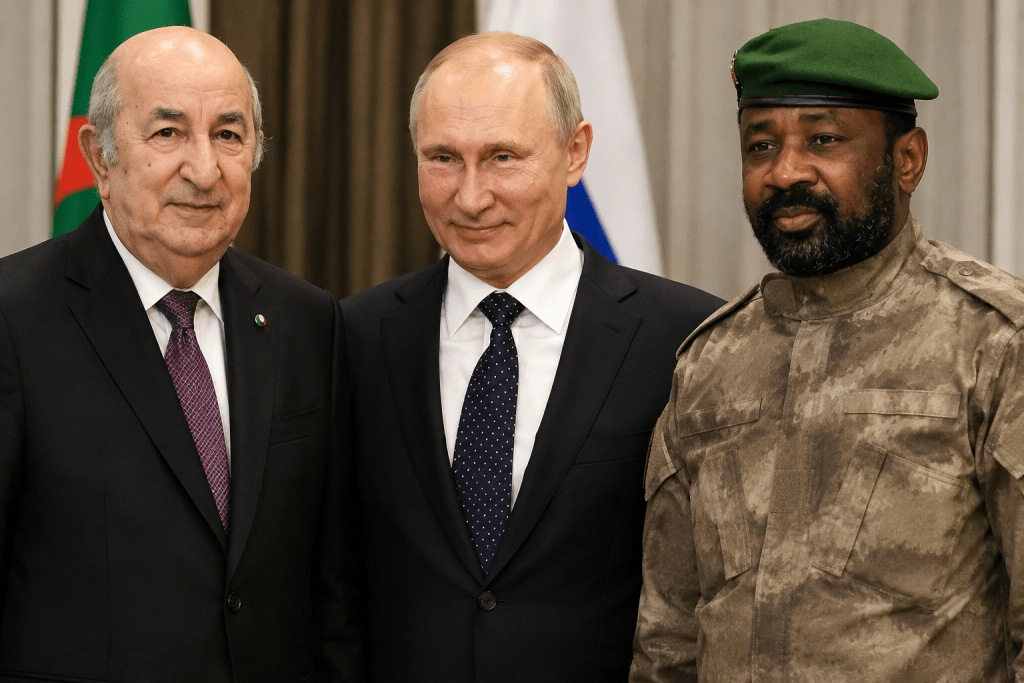
The restoration of relations is widely viewed as an important step toward improving regional stability, as the Sahel continues to face escalating insurgent violence. Algeria has long played a significant diplomatic role in mediating conflicts in northern Mali, while Mali’s military government has increasingly prioritized security cooperation with new international partners following the withdrawal of French and United Nations forces.
The diplomatic breakthrough also represents a strategic gain for Russia, which has steadily expanded its political and security presence across the Sahel in recent years. Moscow has strengthened military cooperation with Mali, Burkina Faso and Niger through the Alliance of Sahel States (AES), providing military equipment, training and security assistance as the three countries deepen their partnership with Russia. The normalization of relations between Algeria and Mali reduces regional friction and creates a more favorable environment for Moscow’s broader diplomatic engagement in North and West Africa.
For Russia, the renewed dialogue comes amid increasing geopolitical competition with the United States and European powers for influence across Africa. As Western countries continue to emphasize governance reforms and democratic transitions, Russia has focused its engagement on security cooperation, defence partnerships and state-to-state diplomacy. The reconciliation between Algiers and Bamako aligns with Moscow’s broader objective of strengthening relationships with governments that have sought alternative international partnerships.
Algeria’s role remains particularly significant because of its geographic position and longstanding influence in the Sahel. Sharing a border of more than 1,300 kilometers with Mali, Algeria has historically acted as both a security partner and mediator in regional peace efforts. Improved relations could facilitate greater intelligence sharing, border coordination and joint efforts to combat extremist groups operating across the Sahara.
The agreement also arrives as security conditions across the Sahel remain fragile. Mali, Burkina Faso and Niger continue to confront persistent attacks from jihadist groups linked to al-Qaeda and the Islamic State, prompting governments in the region to pursue closer military cooperation while seeking additional international support. Strengthened diplomatic coordination between Algeria and Mali could complement broader regional initiatives aimed at restoring stability.
For the wider region, the restoration of ties signals more than the resolution of a bilateral dispute. It reflects the evolving geopolitical landscape in which African governments are recalibrating their diplomatic partnerships amid intensifying competition among global powers. As Algeria and Mali rebuild their relationship, the rapprochement is likely to influence future cooperation on security, trade and regional integration while reinforcing the Sahel’s growing importance in international diplomacy.
