
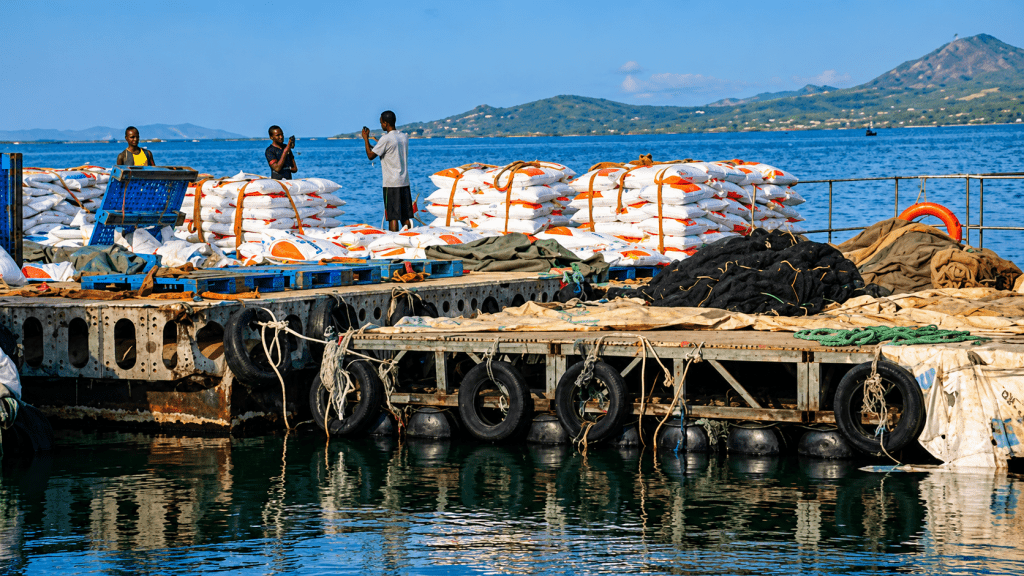
The rapid response prevented the mass fish deaths that farmers had come to fear. Instead of counting losses, the community was able to preserve thousands of tilapia and protect investments in fingerlings, feed, labor and cage infrastructure. For many farmers, the incident demonstrated that predictive technology could make cage farming safer and more commercially reliable.
The breakthrough follows years of research by the Kenya Marine and Fisheries Research Institute, working with the Nairobi-based ShoShin Innovation Hub. Together, they developed a monitoring system that uses sensors anchored beneath fish cages to measure dissolved oxygen, water temperature and other chemical conditions.
The information is transmitted through communication gateways to cloud-based servers, where artificial intelligence compares current readings with years of environmental data. When the system identifies conditions associated with previous fish deaths, it automatically sends farmers clear instructions by SMS, advising them to reduce feeding, relocate cages or monitor oxygen levels more closely.
The use of ordinary text messages has made the system accessible to farmers who do not own smartphones or have reliable internet access. ShoShin says much of the software, cloud infrastructure and electronic hardware was developed locally, helping reduce the cost of deploying the technology while ensuring that it responds to the needs of Kenyan fish farmers.
The innovation addresses a problem that has caused significant financial damage around Lake Victoria. Between 2024 and 2025, repeated episodes of dangerously low oxygen, a condition known as hypoxia, destroyed fish stocks worth nearly $1 million in the Dunga Beach area. The losses affected not only farmers but also traders, transporters, processors and other businesses that depend on the lake’s fish economy.
Hypoxia is particularly dangerous because it cannot be detected by sight. Tilapia and Nile perch begin experiencing stress when dissolved oxygen falls below roughly two milligrams per liter, and they can suffocate when levels approach zero. Pollution, climate variability, heavy nutrient runoff and the concentration of fish cages have all contributed to more frequent oxygen shortages in parts of the lake.
Agricultural chemicals, untreated sewage and industrial waste carried into the lake by rivers encourage the growth of algae. Although algae produce oxygen during daylight, they consume it at night, while their decomposition removes even more oxygen from the water. Uneaten fish feed and organic waste beneath cages can further intensify the problem in heavily farmed areas.
Scientists caution that technology cannot replace efforts to reduce pollution and improve the environmental management of Lake Victoria. Stronger controls on agricultural runoff, sewage disposal and the placement of fish cages will remain essential to protecting the lake’s long-term health. The monitoring system nevertheless gives farmers a valuable layer of protection while those broader challenges are addressed.
For communities around the lake, the technology represents more than a scientific achievement. It shows how locally designed innovation can protect livelihoods, improve food production and make aquaculture more resilient to environmental change. As the system expands to more farming areas, it could help transform fish farming from a high-risk venture into a more predictable and sustainable source of income.
