
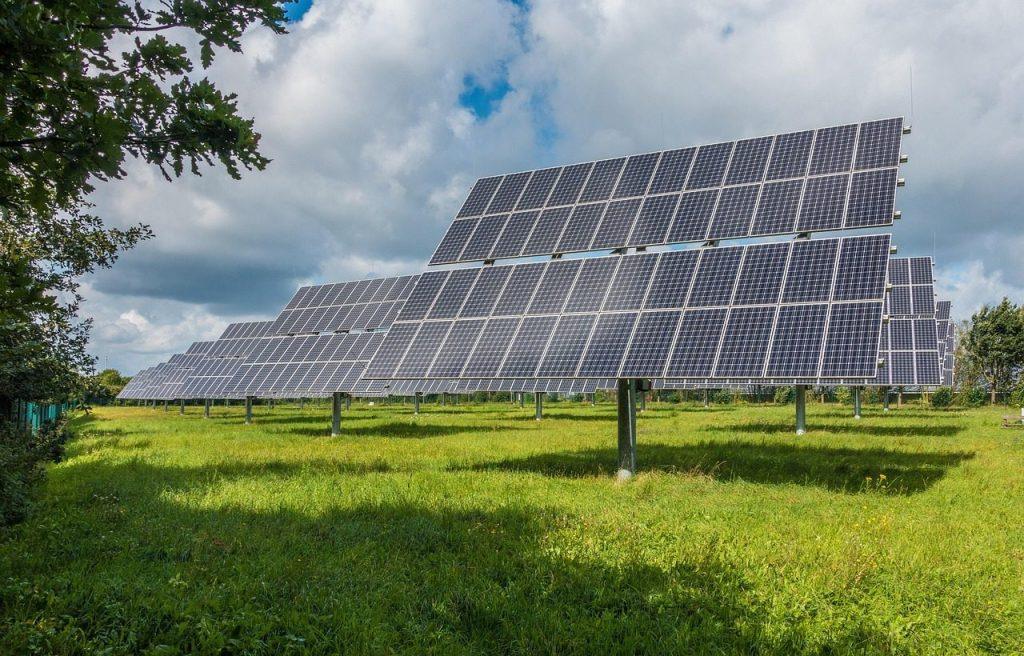
Across Africa, renewable energy projects are now outpacing traditional power developments, reflecting a profound transformation in how governments, investors and businesses are responding to the continent’s growing demand for electricity. Of the 322 energy projects announced across Africa in 2025, more than half were solar developments, far exceeding investments in hydropower, gas and coal generation.
The trend signals a broader recalibration of Africa’s energy strategy. Faced with rising fuel import costs, aging infrastructure, unreliable electricity supplies and mounting industrial demand, many countries are increasingly turning to renewable technologies that can be deployed faster and at lower cost than conventional power plants.
The economics are difficult to ignore.
Over the past decade, the cost of utility-scale solar power has fallen dramatically, while wind energy has become one of the most affordable sources of new electricity generation worldwide. These declining costs have altered investment calculations across African markets, making renewable energy projects not only environmentally attractive but commercially compelling.
The result has been a surge in new capacity. Africa added a record 11.3 gigawatts of renewable energy in 2025, nearly three times the amount installed the previous year. Countries such as South Africa, Egypt and Ethiopia have emerged as key drivers of the continent’s renewable expansion, while solar adoption continues to spread into new markets.
Yet the transformation extends beyond large-scale utility projects.
Increasingly, energy is being generated closer to where it is consumed. Mines, manufacturing facilities, telecommunications towers and residential communities are adopting distributed solar and battery systems that operate independently of national grids. These decentralized solutions are helping businesses secure reliable electricity while reducing exposure to power shortages and volatile fuel prices.
Investors have taken notice.
Renewable energy projects generally require less time to develop than coal-fired plants or large hydropower facilities, allowing capital to be deployed more quickly and revenues to begin flowing sooner. In an environment where investment certainty is highly valued, the ability to complete projects within a few years rather than a decade has become a powerful advantage.
A striking example can be found in the Democratic Republic of Congo, where one of Africa’s largest mining operations is being supplied by a massive solar-and-battery project that advanced from agreement to near completion in less than a year. Such timelines would be nearly impossible for traditional power infrastructure.
The momentum is also being reinforced by policy changes. Governments are gradually opening electricity markets, encouraging private power generation and supporting investment in clean energy infrastructure. In some countries, regulatory reforms have unlocked a wave of industrial-scale renewable projects that would have been difficult to develop only a few years ago.
Still, significant challenges remain.
Many African utilities continue to face financial difficulties, and developers often encounter higher borrowing costs than their counterparts in Europe, North America or Asia. Financing renewable projects on the continent can cost two to three times more because of perceived political and economic risks. Development finance institutions are increasingly stepping in to bridge that gap through guarantees, concessional loans and blended financing mechanisms.
What is becoming clear, however, is that Africa’s energy transition is no longer constrained by technology.
The solar panels are available. Battery costs continue to fall. Investment interest is growing. The continent possesses some of the world’s richest renewable energy resources and a rapidly expanding demand for power. The remaining challenge is not whether clean energy can work in Africa, but whether governments, financiers and institutions can move quickly enough to scale it.
The story of Africa’s next energy chapter may not be written in coal mines or massive dams. Increasingly, it is being written under open skies, where sunlight and wind are emerging as some of the continent’s most valuable economic assets.
