
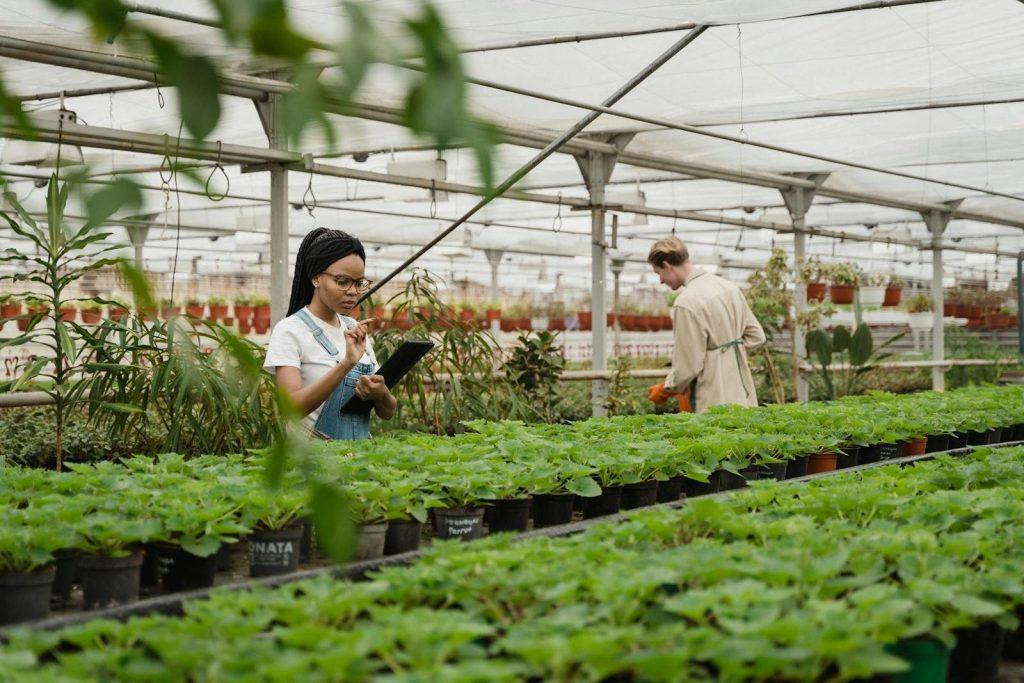
At the center of this transformation is a new category of opportunity often described as “smart agricultural investment,” an approach that combines technology, sustainability and value-chain development to modernize farming while improving returns.
As droughts and unpredictable weather patterns intensify, investment is flowing into climate-smart agriculture, practices designed to protect yields while reducing environmental impact. These include drought-resistant seeds, improved irrigation systems and soil conservation techniques, all aimed at stabilizing production in an increasingly uncertain climate.
For investors, the appeal lies not only in resilience but in necessity. In many parts of Africa, adapting to climate change is no longer optional; it is a prerequisite for sustaining agricultural output.
Technology Is Redefining the Farm
At the same time, digital tools are beginning to alter how agriculture is practiced across the continent. From artificial intelligence used in crop diagnostics to mobile platforms that connect farmers to credit and markets, agritech is emerging as one of the fastest-growing segments of the sector.
The impact has been measurable. Studies show that digital farming solutions can increase productivity by more than 30 percent while raising farmer incomes significantly, underscoring the commercial potential of technology-driven agriculture.
In countries like Kenya and Nigeria, startups are already building ecosystems that combine data, logistics and finance, turning smallholder farming into a more scalable and investable activity.
Another shift is taking place further down the value chain. Agro-processing, the transformation of raw agricultural products into finished goods, is gaining momentum as governments and investors seek to capture more value locally.
Processing facilities, cold storage systems and packaging infrastructure are expanding, driven by rising urban demand and the need to reduce post-harvest losses. The result is a sector that is no longer focused solely on production, but on building complete agricultural economies.
Demand is also reshaping investment priorities. Africa’s urban population is expanding rapidly, driving increased consumption of meat, fish and processed foods. This has placed new emphasis on livestock and aquaculture, sectors that are expected to play a critical role in meeting future protein needs.
Meat consumption alone is projected to rise sharply in the coming decades, creating opportunities for investment in feed production, breeding technologies and disease management systems.
Export Markets and High-Value Crops
Beyond domestic demand, global markets continue to offer opportunities. High-value crops such as cocoa, coffee and horticultural products remain central to Africa’s export economy, with investments increasingly focused on improving quality, yields and supply chains.
For many countries, the goal is not simply to export more, but to export better, leveraging improved seeds, logistics and certification systems to compete in premium international markets.
Africa’s agricultural potential is also defined by its land. The continent holds an estimated 600 million hectares of uncultivated arable land, a resource that has attracted interest from both domestic and international investors.
Large-scale commercial farming, supported by mechanization and irrigation, is emerging as one pathway to increase output. But it also raises complex questions around land use, environmental sustainability and community impact.
Financing the Missing Piece
Perhaps the most persistent constraint, and opportunity, lies in financing. Access to credit remains limited for many farmers, creating a gap that has spurred new investment models, including agri-finance platforms and blended-finance initiatives.
Bridging that gap could unlock billions in productivity and transform agriculture into a more formal and scalable sector.
The direction of travel is increasingly clear. Agriculture in Africa is no longer viewed simply as a means of subsistence, but as a sector capable of driving economic growth, job creation and industrial development.
Yet the transformation is far from complete. Infrastructure gaps, regulatory uncertainty and climate risks continue to shape the landscape, reminding investors that opportunity in agriculture is often inseparable from complexity.
Still, as capital, technology and policy begin to align, the sector is moving into a new phase, one in which the future of African agriculture may be defined not only by what is grown, but by how it is financed, processed and brought to market.
