
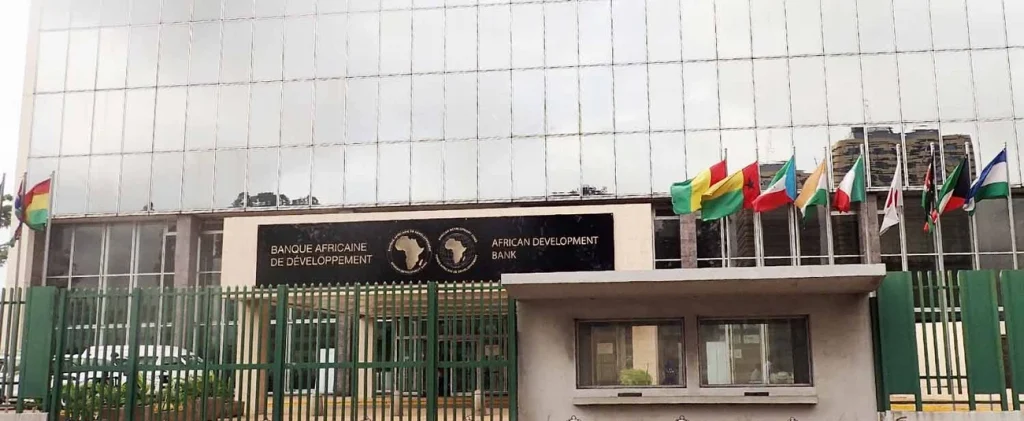
Against that backdrop, the African Development Bank has placed a new emphasis on mobilizing capital from within the continent itself, arguing that Africa can no longer rely primarily on external financing to fund infrastructure, energy, industrialization and climate adaptation.
The bank estimates that Africa faces an annual development financing gap of roughly $400 billion, a figure that continues to widen as borrowing costs rise and concessional funding becomes more constrained.
“Africa needs long-term finance for energy, food security, climate adaptation, infrastructure and jobs,” the bank said in remarks released ahead of the meetings.
The meetings are the first annual gathering under the leadership of AfDB President Sidi Ould Tah, who assumed office last year and has made domestic capital mobilization a central pillar of his agenda. His proposed framework, known as the New African Financial Architecture for Development, seeks to channel more of Africa’s own institutional capital into development projects across the continent.
Supporters of the initiative argue that Africa possesses substantial untapped financial resources, including pension funds, sovereign wealth assets and domestic savings pools that could be deployed more strategically toward infrastructure and industrial investment.
African officials estimate that institutional capital across the continent amounts to nearly $4 trillion, though much of it remains fragmented, conservatively invested or directed toward foreign assets rather than domestic development.
Kenyan President William Ruto, who has been among the strongest advocates for reforming Africa’s development financing model, argued earlier this month that the issue is not necessarily a lack of capital, but the inability to effectively channel African capital toward African projects.
Yet economists caution that domestic financing alone may not be sufficient to meet the scale of the continent’s development needs.
Sub-Saharan Africa’s savings rate remains significantly below the global average, reflecting lower incomes, youthful populations and limited household surplus capital. Analysts say domestic resources will likely need to be combined with international private investment, multilateral guarantees and project de-risking mechanisms to attract financing at scale.
The broader challenge confronting the continent is becoming increasingly structural.
As advanced economies redirect fiscal resources toward defense, industrial policy and domestic priorities, African governments are facing a global financing environment that is both more fragmented and more competitive. Development finance institutions are increasingly encouraging private-sector participation and blended finance structures rather than relying solely on sovereign lending.
This year’s meetings are unfolding under additional pressure from a regional Ebola outbreak centered in neighboring Democratic Republic of Congo, which has raised concerns about attendance and travel across parts of Central Africa. Authorities in the Republic of Congo, however, have stated that no cases have been recorded in the country and that the meetings are proceeding in accordance with World Health Organization guidance.
Despite those concerns, the atmosphere surrounding the summit reflects a broader sense of urgency.
The African Development Bank’s 2026 meetings are taking place under the theme “Mobilising Africa’s Development Financing at Scale in a Fragmented World,” a phrase that captures the increasingly complex economic environment confronting the continent.
For many African policymakers, the central question is no longer whether global financing conditions have changed, but how quickly the continent can adapt to them.
The answer may ultimately determine whether Africa’s next phase of economic development is financed primarily from abroad or increasingly from within.
