
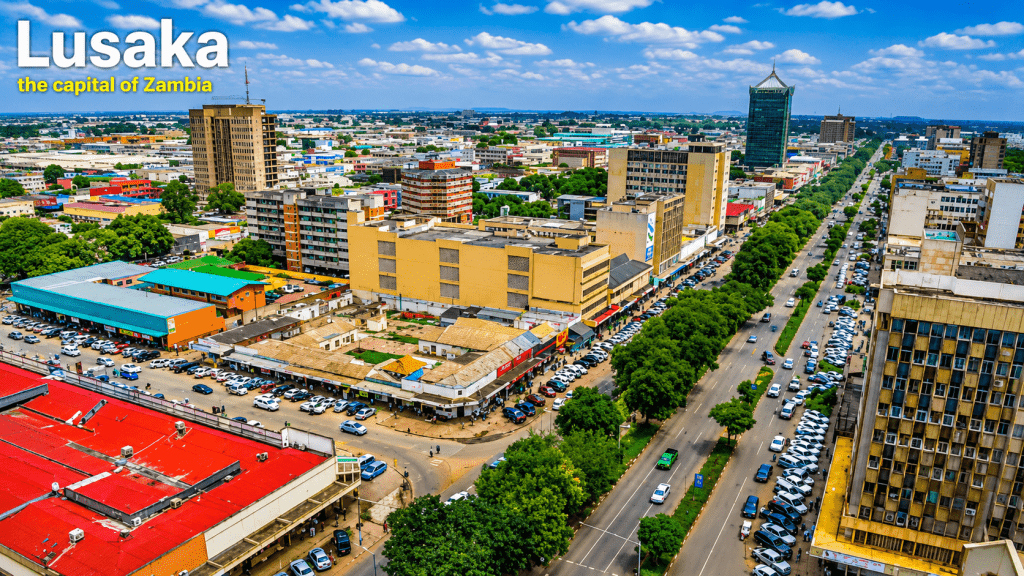
Zambia entered Hichilema’s first term carrying a heavy financial burden. The country became Africa’s first sovereign state to default during the Covid-19 pandemic, leaving the government facing complex negotiations with a diverse group of creditors. Restoring the country’s financial standing required agreements involving official creditors, China and private bondholders — groups with different priorities and lending structures.
The government eventually made substantial progress in restructuring those obligations while implementing a six-year programme with the International Monetary Fund. That programme concluded in January with most external debt commitments addressed and Zambia’s international reserves reaching their strongest level on record, according to the Business Insider Africa analysis.
For investors, the election provides an important element that financial markets often value as highly as individual reforms: continuity. A narrower result could have increased pressure on the government to soften its economic programme or redirect spending toward short-term political priorities. A decisive mandate gives Hichilema greater room to continue reforms without the complications that could accompany a fragile parliamentary position or coalition government.
The government has already indicated that it intends to pursue a successor arrangement with the IMF. A strong electoral mandate could strengthen Zambia’s position in those discussions by demonstrating that the administration retains substantial political support for its economic agenda.
That stability comes as some of Zambia’s key economic indicators are moving in a favorable direction. Copper production, which remains central to the country’s export earnings and investment prospects, increased by nearly 18 percent in the first half of last year. Economic growth forecasts for this year remain above 5 percent, while inflation has been moving closer to the central bank’s target range.
Copper will be particularly important to Zambia’s next phase of growth. The metal is increasingly valuable to the global energy transition because of its widespread use in electricity networks, renewable energy systems, electric vehicles and data infrastructure. Zambia’s large deposits therefore place the country in a potentially advantageous position as international demand for critical minerals expands.
Political stability could make it easier to convert that geological advantage into investment. Mining companies typically make decisions over decades, meaning predictable taxation, regulation and economic policy can be important considerations when determining whether to commit billions of dollars to new mines and processing facilities.
The election itself also offered investors a measure of reassurance. Zambia’s electoral commission declared Hichilema the winner with about 60 percent of the vote, compared with roughly 38 percent for his closest challenger, Brian Mundubile. Domestic monitors reviewed publicly available polling-station results, while regional observers described the voting process as calm and orderly. The largest opposition party has also accepted its role in Parliament, where it is expected to hold about 60 seats.
Financial markets reacted with similar calm. Zambia’s dollar-denominated international bond traded steadily in the high-90s after the result, suggesting investors had largely anticipated the outcome and did not see the election as introducing a major new source of political risk.
That reaction matters because African economies often face higher borrowing costs partly because investors attach substantial premiums to political uncertainty. Predictable elections, credible institutions and consistent economic policies can gradually reduce those perceptions, potentially lowering the cost of capital for governments and businesses.
Zambia’s experience also offers a broader lesson about economic reform in Africa. Governments are often reluctant to remove subsidies, restructure debt or introduce market-based pricing because such measures can be politically unpopular. Hichilema’s re-election suggests that difficult reforms do not necessarily prevent governments from retaining public support when voters believe they are contributing to longer-term stability.
The challenges facing Zambia have not disappeared. Electricity shortages continue to constrain businesses, while fiscal pressures remain significant. The country must also translate rising copper production and improving macroeconomic conditions into jobs, higher household incomes and broader economic opportunities if its recovery is to become sustainable.
Diversification will remain equally important. Zambia’s reliance on copper leaves government revenue and foreign-exchange earnings vulnerable to changes in global commodity prices. Expanding agriculture, manufacturing, energy, tourism and value-added mineral processing could help create a more resilient economy while ensuring that the benefits of investment reach a wider share of the population.
Still, the election has removed one significant uncertainty at an important moment. Zambia enters Hichilema’s second term with debt restructuring largely advanced, stronger reserves, expanding copper production and a government that has received a clear mandate to continue its economic programme.
For international investors, that combination deserves attention. Zambia’s recovery remains unfinished, but political continuity gives the country an opportunity to move from financial stabilization toward investment and sustained growth. If the government can maintain fiscal discipline while translating its mineral wealth into broader development, the election could mark the beginning of a more confident chapter for one of Africa’s most resource-rich economies.
