
The figures represent a notable change from the same quarter a year earlier, when India imported no urea from any of the four countries. The rapid increase illustrates how geopolitical uncertainty can create new commercial opportunities, particularly for African economies that have invested heavily in fertiliser production and are looking to expand into large international markets.
For Egypt, Algeria and Nigeria, India represents an especially attractive destination. The country is one of the world’s largest consumers of fertiliser, driven by an enormous agricultural sector that supports hundreds of millions of people. Although India operates 33 urea plants with combined production capacity of 26.9 million tonnes, imports still account for about one-fifth of its annual requirements.
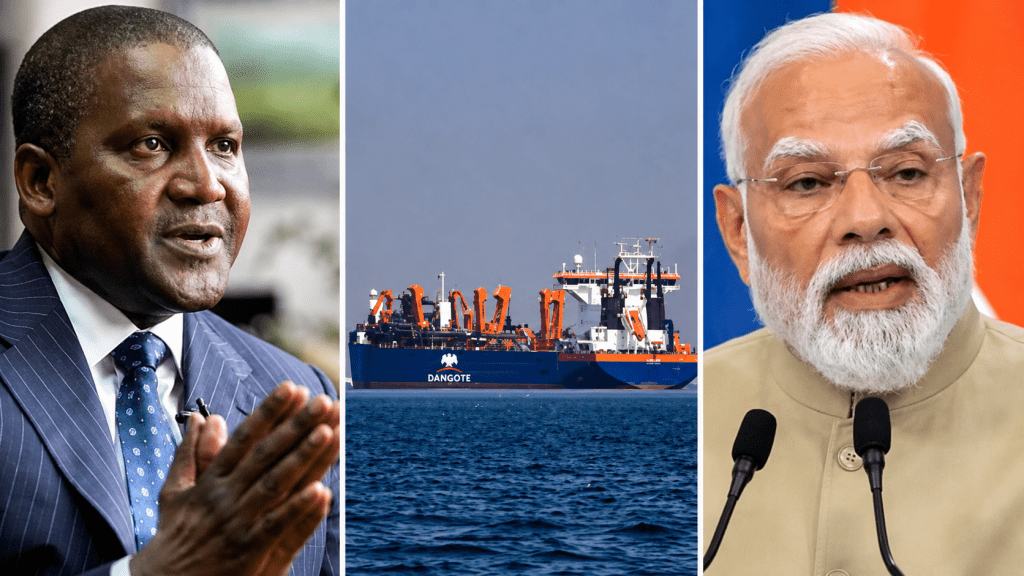
That gap creates an important opening for Africa’s growing fertiliser industry. Egypt has established producers including MOPCO and Abu Qir, while Algeria’s industry includes Sorfert and AOA. Nigeria has also built substantial production capacity through companies such as Dangote Fertiliser and Indorama Eleme, giving West Africa a stronger presence in a global market traditionally dominated by producers in Asia, the Middle East and Eastern Europe.
The latest shipments build on a broader expansion in trade. During the 2025-26 financial year, Nigeria supplied India with 447,090 tonnes of urea, while Algeria exported 217,059 tonnes and Egypt shipped 194,830 tonnes. Together with Georgia, those countries accounted for 8.8 percent of India’s 11.2 million tonnes of urea imports during the year.
India’s accelerated diversification has been driven partly by disruptions around the Strait of Hormuz, one of the world’s most strategically important maritime routes. New Delhi traditionally obtains more than 40 percent of its imported urea and phosphatic fertilisers from Gulf suppliers, leaving agricultural supply chains vulnerable when vessel movements, freight costs and delivery schedules are disrupted.
As uncertainty affected the Persian Gulf, India moved to secure additional supplies from Africa as well as markets in Asia and Europe. The strategy does not necessarily signal an end to purchases from Gulf producers. Instead, it reflects an effort to build a wider network of suppliers so that disruptions in one region do not threaten fertiliser availability for Indian farmers.
The shift could produce longer-term benefits for African economies. Reliable demand from India could encourage further investment in fertiliser factories, ports, storage facilities and logistics networks. It could also help African countries expand exports of manufactured products rather than relying predominantly on raw commodities.
Egypt, Algeria and Nigeria are particularly well positioned because their natural gas resources support large-scale urea production. Turning those resources into fertiliser before export allows the countries to capture more industrial value domestically while creating skilled jobs and generating foreign-exchange earnings.
The opportunity comes as India confronts rising fertiliser costs. The country’s fertiliser ministry has proposed increasing government subsidies to 3.54 trillion rupees, or approximately $37.1 billion, from an original budget allocation of 1.77 trillion rupees. The subsidy bill had already exceeded 2.17 trillion rupees in the previous financial year as the government worked to keep fertiliser affordable for farmers despite higher international prices.
India has simultaneously reduced its fertiliser demand forecast following weaker rainfall expectations. Requirements for the current kharif growing season have been lowered to 38.39 million tonnes from 39.05 million tonnes, while projected urea demand has been reduced by about 400,000 tonnes to 19 million tonnes. Even with the lower forecast, the country’s enormous agricultural sector means imported fertiliser will remain an important part of its supply strategy.
For Africa, the significance of the shift extends beyond the 1.1 million tonnes already delivered. It demonstrates how investment in industrial capacity can allow African economies to respond quickly when global supply chains change. Egypt, Algeria and Nigeria are no longer participating only as suppliers of raw materials; they are increasingly exporting processed products essential to food production in some of the world’s largest economies.
If the new trade relationships prove reliable and commercially competitive, India’s search for alternative suppliers could develop into a more permanent Africa-Asia fertiliser corridor. That would give Indian farmers a more diversified supply chain while providing African producers with sustained access to one of the world’s largest agricultural markets.
