
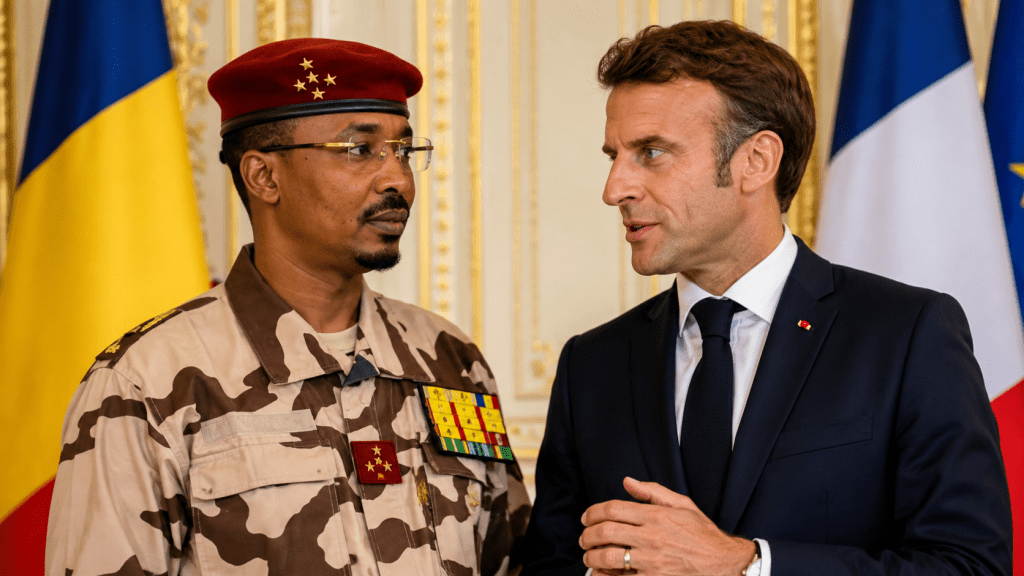
Relations between the two countries changed dramatically in late 2024 when Chad terminated a defense agreement that had underpinned French military operations in the country for 65 years. French troops completed their withdrawal in early 2025 as President Mahamat Idriss Déby Itno sought to redefine Chad’s foreign and security partnerships while emphasizing national sovereignty.
Since then, Chad has explored security cooperation with several international partners, including Russia, Türkiye and the United Arab Emirates. While those relationships expanded the country’s diplomatic options, officials have continued evaluating how different partnerships could best address the complex security challenges facing the Lake Chad Basin and Chad’s eastern border with Sudan. The renewed dialogue with France reflects a pragmatic approach focused on strengthening operational capabilities while preserving Chad’s independent decision-making.
For France, the agreement represents part of a broader transformation of its military strategy across Africa. Following troop withdrawals from Mali, Burkina Faso, Niger and Chad, Paris has shifted away from maintaining large permanent deployments toward smaller, more flexible partnerships centered on capacity building, professional military education and intelligence cooperation. The approach is intended to respond more closely to the priorities identified by African governments themselves.
For Chad, enhanced security cooperation could strengthen efforts to combat armed groups operating around the Lake Chad Basin while improving border surveillance and military readiness. Training, intelligence sharing and technical support are expected to help modernize the country’s armed forces as they respond to evolving regional security threats. At the same time, the revised framework allows Chad to retain greater ownership of its defense policies than under previous arrangements.
The renewed engagement also highlights a broader shift in Africa’s international partnerships. Many governments are increasingly pursuing diversified relationships with multiple global partners, selecting cooperation models that align with national priorities rather than relying exclusively on a single foreign ally. This more flexible approach has become a defining feature of diplomacy across the continent in recent years.
While the renewed partnership remains in its early stages, it signals a willingness on both sides to redefine a long-standing relationship on new terms. Rather than restoring the previous model, Chad and France are building a more limited and mutually agreed framework that emphasizes cooperation, sovereignty and shared security objectives.
If successfully implemented, the agreement could strengthen Chad’s security capabilities while providing a model for how historic partnerships can evolve to meet changing geopolitical realities. In a region facing persistent security challenges, the renewed cooperation demonstrates that relationships can be reshaped through dialogue and shared interests while respecting national independence.
