
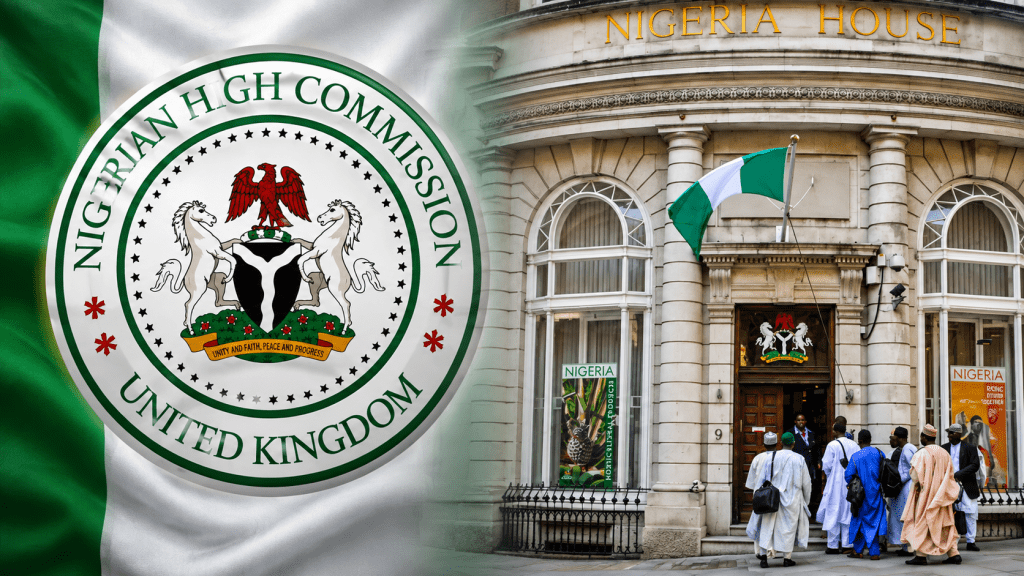
The deployment was ordered by Interior Minister Olubunmi Tunji-Ojo, who directed the Nigeria Immigration Service to send officials from its headquarters to the United Kingdom. The exercise will cover applicants with pending requests, first-time applicants and passport holders whose documents have less than a year before expiration.
For Nigerians living outside London, the mobile service could significantly reduce the cost and inconvenience of accessing passport facilities. Until now, many applicants have had to travel considerable distances for appointments, adding transportation and accommodation expenses to an already lengthy administrative process.
Britain is home to one of the largest Nigerian communities outside Africa. More than 270,000 Nigerian-born residents were recorded in England and Wales in the 2021 census, up from about 191,000 a decade earlier, and that population grew further during the post-pandemic increase in international students and skilled workers entering the country.
The special intervention also complements Nigeria’s increasingly digital approach to passport services. A contactless renewal system introduced for citizens abroad in 2025 allows eligible applicants to submit biometric information remotely, reducing the need for repeated visits to diplomatic missions. The programme has since expanded to countries including the United States, Jamaica, Mexico and Brazil.
Those online channels will remain operational while the UK exercise is underway, and passport home delivery will continue for applicants who choose the service. The mobile team is therefore intended not to replace digital reforms but to provide additional support for applicants who still require physical enrolment or whose cases remain unresolved.
Nigeria’s passport system has undergone substantial reform in recent years. When Tunji-Ojo became interior minister in 2023, the system had accumulated more than 200,000 pending applications. The government said it cleared that backlog within weeks before introducing changes aimed at preventing similar delays from building up again.
Authorities have also established a centralized passport personalization center in Abuja, replacing a more fragmented production system. The Interior Ministry says the facility can produce between 4,500 and 5,000 passports a day, sharply increasing capacity compared with the earlier model.
The UK exercise reflects a wider challenge facing African governments as their diaspora populations expand. Citizens living abroad increasingly expect access to public services that is comparable in speed and convenience to what they would receive at home, pushing governments to combine digital platforms, home delivery and mobile outreach rather than relying solely on embassies and consulates.
For Nigeria, the initiative represents another step toward building a passport system capable of serving a large and geographically dispersed global community. If the reforms continue to improve speed and accessibility, they could strengthen confidence in public institutions while deepening the connection between the country and millions of Nigerians living overseas.
