
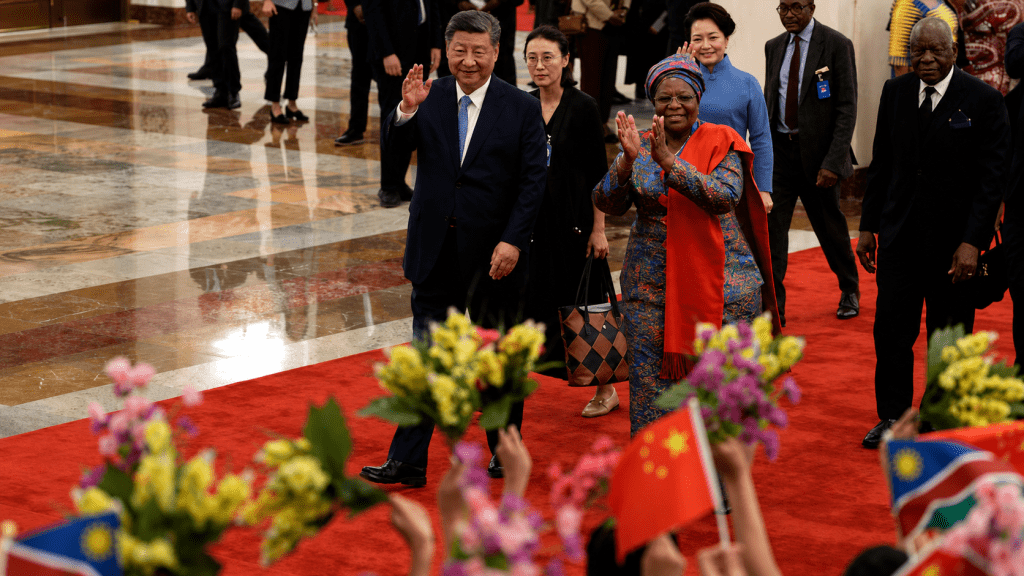
For Namibia, the agreements arrive at an important moment. The country is seeking investment that can support industrial growth while reducing its reliance on exporting raw materials. President Nandi-Ndaitwah has made job creation and economic diversification central to her administration, and her delegation to China included dozens of business representatives looking for new commercial opportunities.
Mining is expected to remain a major pillar of the partnership. Namibia holds significant deposits of uranium, lithium and rare earth minerals, all of which are increasingly important to the global transition toward renewable energy, electric vehicles and advanced technology. The two countries agreed to strengthen cooperation in developing these resources while promoting local processing, skills development and technology transfer.
That focus on local value addition could help Namibia capture a larger share of the wealth generated by its mineral resources. Instead of relying mainly on the export of unprocessed commodities, the country is seeking to develop domestic industries that can refine minerals, manufacture components and create skilled employment for Namibians.
China is already one of Namibia’s most important economic partners. It purchases roughly a quarter of the country’s exports, with uranium accounting for most of the goods sold to the Chinese market. Chinese companies have also invested heavily in Namibia’s mining sector, highlighting the depth of the commercial relationship between the two countries.
Energy cooperation is also expected to expand as Namibia prepares for the development of newly discovered offshore oil reserves. Discoveries by international energy companies have raised expectations that Namibia could become Africa’s fourth-largest oil producer by 2030. The country is also pursuing green hydrogen and renewable energy projects as part of a wider effort to build a more resilient and sustainable energy industry.
Agriculture and water development formed another key part of the discussions. President Nandi-Ndaitwah has called for a green revolution that would strengthen food production, improve water management and unlock the commercial potential of Namibia’s agricultural sector. Greater investment in farming and irrigation could support rural communities while reducing unemployment and food insecurity.
The agreements reflect Namibia’s effort to use international partnerships to finance long-term development without limiting cooperation to a single sector. By combining investment in transport, energy, minerals, agriculture and technology, the government hopes to broaden the country’s economic base and create opportunities beyond traditional extractive industries.
As global demand for critical minerals and clean energy grows, Namibia is emerging as an increasingly important investment destination. Its expanding relationship with China offers access to capital, infrastructure expertise and a large export market, while allowing the country to negotiate for more local processing, knowledge transfer and employment.
The state visit ultimately represents more than a strengthening of diplomatic ties. It signals Namibia’s intention to turn its natural wealth into wider economic development and to position itself as a growing center for mining, energy and green industrial investment in Southern Africa.
