
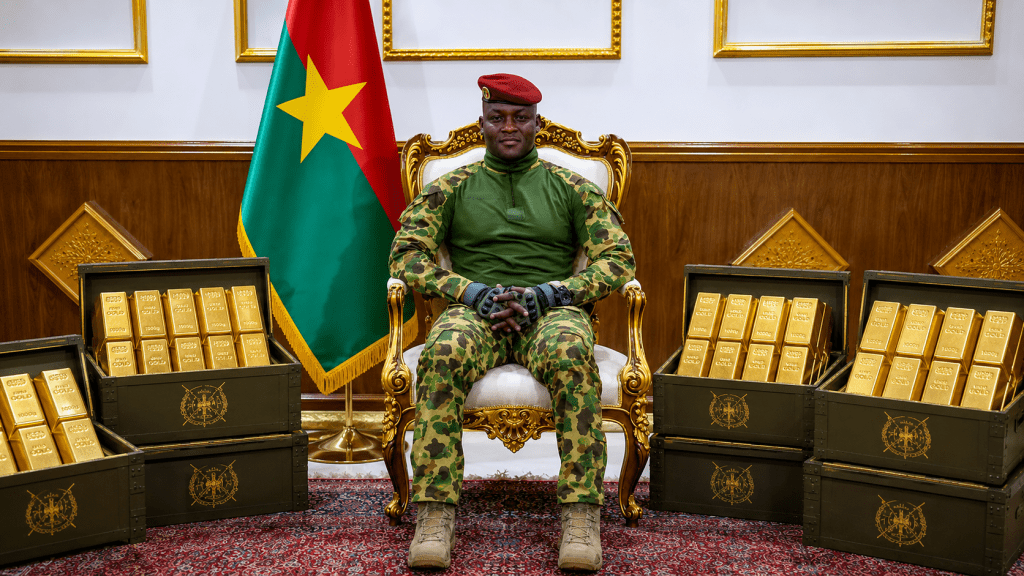
At a market price of roughly $3,400 per troy ounce, that amount of gold is valued at about $6 billion. The scale of the production reflects both Burkina Faso’s position as a major African gold producer and the strength of global bullion prices, which have been supported by geopolitical uncertainty and sustained demand from central banks.
The increase in officially recorded gold is central to the government’s effort to draw more artisanal mining into the formal economy. While industrial producers report their output directly, SONASP purchases gold from smaller operators, giving the state greater visibility over production and improving its ability to track sales, collect revenue and build national reserves.
Artisanal mining has long been difficult to regulate across much of West Africa, where informal trading networks often move gold across borders without passing through government channels. In Burkina Faso, the authorities have responded by strengthening controls over the weighing, processing and packaging of gold while intensifying operations against illicit trading networks.
The government has also created nine artisanal mining cooperatives and designated four mining corridors intended to reduce conflict between small-scale miners and industrial companies. These measures form part of a new mining framework designed to increase transparency while expanding the state’s participation in one of the country’s most valuable industries.
Burkina Faso is simultaneously advancing projects through the Burkina Faso Mining Participation Company, or SOPAMIB, a state-owned investment vehicle established to increase government involvement in mining operations. The broader policy reflects the military administration’s push for greater economic sovereignty and a larger national stake in strategic mineral resources.
The mining reforms are unfolding alongside investments in electricity generation, another sector the government considers essential to industrial growth. Four power plants with a combined capacity of 126.4 megawatts were completed during the first half of the year, while work continued on additional facilities intended to improve energy access and support domestic production.
For Burkina Faso, the challenge will be to turn rising gold output into broader and more durable economic gains. Stronger oversight could increase public revenue and reduce illegal exports, but long-term success will depend on transparent management, improved security and the government’s ability to ensure that mineral wealth supports development beyond the mining sector.
