
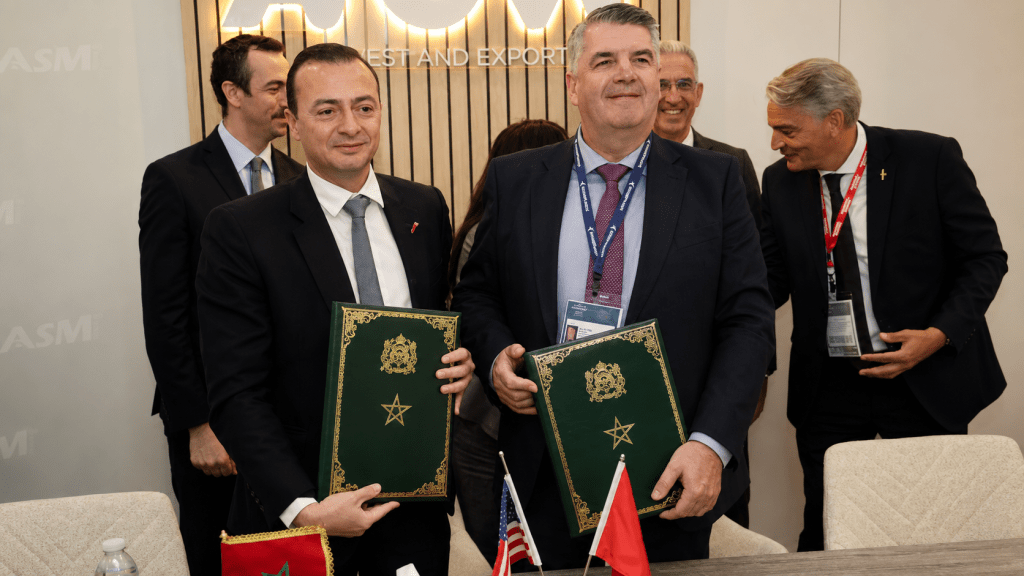
The investment fills one of the final gaps in Morocco’s rapidly expanding aerospace ecosystem. Over the past two decades, the country has successfully attracted manufacturers producing aircraft wiring, composite materials, precision-machined parts and electronic systems for global aerospace companies. The addition of advanced surface treatment capabilities means manufacturers operating in Morocco will increasingly be able to complete the entire production process domestically, making the country’s aerospace industry more competitive and efficient.
The timing of Curtiss-Wright’s arrival aligns with a series of major investments that are reshaping Morocco’s aviation sector. Earlier this year, Safran Landing Systems announced a €280 million factory in Casablanca to manufacture aircraft landing gear, while Brazil’s Embraer expanded its partnership with Morocco to strengthen maintenance, repair and manufacturing capabilities. Together, these projects are reinforcing Morocco’s ambition to become Africa’s premier aerospace production platform.
Morocco’s aerospace industry has grown steadily through a long-term industrial strategy centered on investment incentives, skilled workforce development and integration into global supply chains. Today, the country hosts more than 140 aerospace companies supplying components to major manufacturers including Boeing, Airbus and Safran. The sector has become one of Morocco’s fastest-growing export industries, generating billions of dollars in annual export revenue while creating thousands of highly skilled jobs.
For Curtiss-Wright, the investment represents more than a geographic expansion. Company executives have indicated that Morocco will serve as the foundation for their African operations, with plans to expand beyond Casablanca over time. The decision reflects growing confidence in Morocco’s industrial capabilities, political stability and strategic location between Europe, Africa and the Middle East, allowing manufacturers to serve multiple markets from a single production base.
The project is also expected to deepen technology transfer and strengthen Morocco’s pool of highly skilled engineers and technicians. Advanced surface treatment is one of the most technically demanding stages of aerospace manufacturing, requiring specialized expertise and strict international certification standards. Establishing these capabilities locally is likely to enhance Morocco’s competitiveness while attracting additional high-value investments from global aerospace suppliers seeking integrated manufacturing ecosystems.
For Morocco, attracting Curtiss-Wright represents another milestone in its transformation from a regional manufacturing center into a global aerospace destination. As international companies continue to diversify their supply chains, the kingdom is positioning itself to capture a larger share of the industry’s high-value production. If the momentum continues, Morocco could further cement its status as Africa’s aerospace leader while creating new opportunities for industrial growth, exports and technological innovation.
