
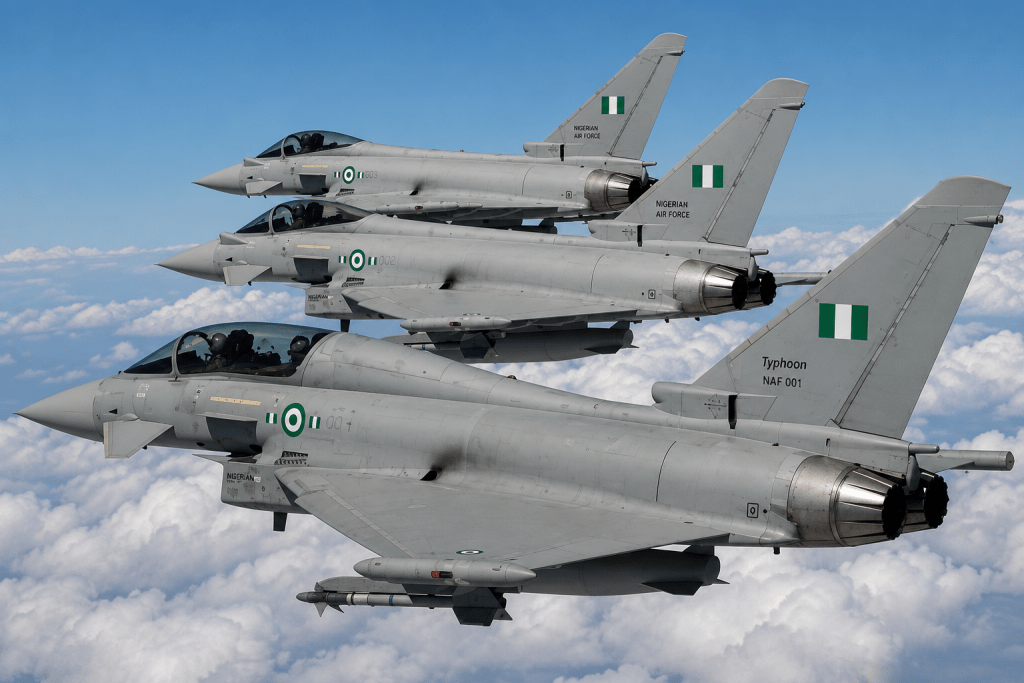
Production of the aircraft is already well underway in Italy. Nigerian defence officials have inspected the manufacturing process, confirming that several fighter jets are in advanced stages of assembly while the helicopters are progressing toward delivery. The aircraft are scheduled to be delivered in phases, allowing the Nigerian Air Force to integrate new platforms gradually while training personnel and expanding operational readiness.
The M-346FA is a multirole light fighter aircraft capable of carrying out air-to-air combat, close air support, reconnaissance and precision strike missions. Designed to operate in both training and combat roles, the aircraft combines advanced avionics with relatively low operating costs, making it well suited to countries seeking versatile military platforms without the expense of larger fighter aircraft. The AW109 Trekker helicopters will complement the fleet by supporting reconnaissance, troop deployment, medical evacuation and light attack operations.
The acquisition forms part of Nigeria’s broader military modernization program. Over the past several years, the country has expanded its inventory with Super Tucano attack aircraft from the United States, JF-17 Thunder fighter jets from Pakistan and China, T129 ATAK helicopters from Türkiye and advanced surveillance platforms. Together, these investments are intended to improve intelligence gathering, rapid response capabilities and sustained air operations across multiple theatres.
Security remains one of Nigeria’s most pressing national challenges. Armed insurgencies in the northeast, bandit attacks in the northwest, separatist unrest in parts of the southeast and crude oil theft in the Niger Delta have placed increasing demands on the country’s security forces. Military planners believe a more capable and modern air force will improve surveillance, precision strike capability and support for ground troops operating across Nigeria’s vast territory.
The agreement also reflects strengthening defence cooperation between Nigeria and Italy. Beyond supplying aircraft, Leonardo has committed to providing long-term technical assistance, maintenance support and pilot training, helping ensure that the new fleet remains operational over its service life. Defence analysts say such partnerships are becoming increasingly important as African countries seek not only advanced military equipment but also the expertise needed to sustain it.
For Nigeria, the acquisition represents more than an expansion of military hardware. It signals a long-term investment in national security and defence modernization at a time when regional security threats continue to evolve. As the new aircraft enter service, they are expected to strengthen the country’s ability to protect its borders, respond to internal security challenges and contribute to regional stability across West Africa.
