
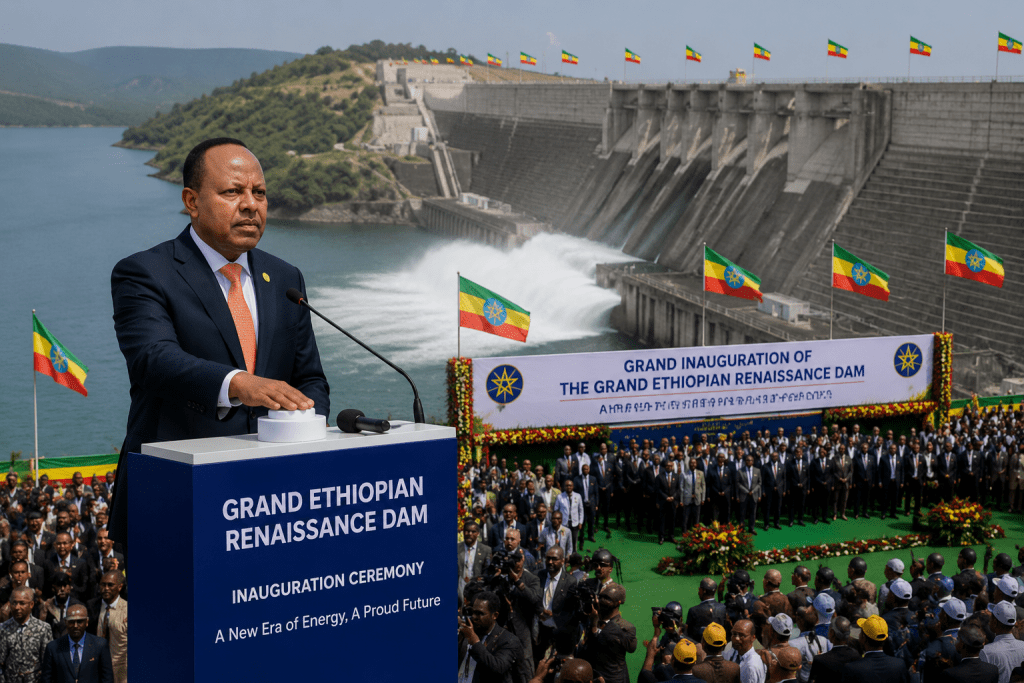
For Ethiopia, the dam represents far more than a major engineering achievement. Reliable electricity has long been viewed as a cornerstone of the country’s industrialization strategy, with policymakers seeking to expand manufacturing, attract investment and improve living standards through increased access to affordable power. Millions of Ethiopians are expected to benefit from improved electricity supply as the national grid continues to expand into underserved communities.
The project is also expected to strengthen Ethiopia’s role as a regional energy supplier. The government has signed electricity export agreements with neighboring countries, including Kenya, Sudan and Djibouti, positioning the country as a key contributor to East Africa’s growing power market. Expanding cross-border electricity trade is expected to generate foreign exchange earnings while supporting regional economic integration and energy security.
Beyond electricity generation, the GERD is expected to serve as a catalyst for broader economic development. Stable power supplies are likely to encourage investment in manufacturing, mining, agriculture and digital industries, sectors that have historically been constrained by limited electricity availability. Improved access to renewable energy could also reduce dependence on imported fossil fuels and strengthen Ethiopia’s long-term economic resilience.
The dam has nevertheless remained one of Africa’s most closely watched infrastructure projects because of longstanding disagreements over the management of the Nile River. Egypt and Sudan have expressed concerns about the potential impact of the reservoir on downstream water flows, while Ethiopia has maintained that the project is intended solely for hydropower generation and will not significantly reduce water availability. Although negotiations have continued for years, the dam has increasingly become both a symbol of Ethiopia’s development ambitions and a focal point of regional diplomacy.
Environmental and energy experts note that hydropower will remain central to Ethiopia’s renewable energy strategy for the foreseeable future. The country already generates the vast majority of its electricity from renewable sources and possesses one of Africa’s largest untapped hydropower resources. The completion of the GERD significantly expands that capacity while complementing ongoing investments in wind, solar and geothermal energy.
For Ethiopia, the completion of the Grand Ethiopian Renaissance Dam marks the culmination of more than a decade of investment, engineering and national commitment. More importantly, it signals the beginning of a new chapter in which abundant renewable energy is expected to drive industrial growth, strengthen regional cooperation and position the country as one of Africa’s leading energy producers.
