
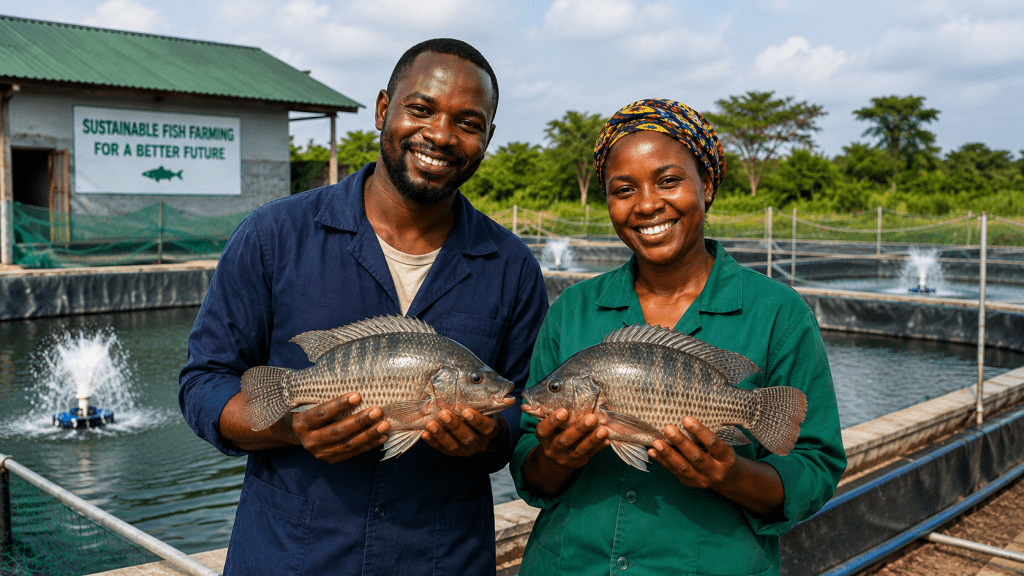
The innovation comes at a time when Kenya is seeking to expand domestic fish production to meet rising demand. Consumption has continued to outpace local supply, forcing the country to rely on imports while natural fish stocks face mounting pressure from overfishing and climate change. By making fish farming viable in water-scarce regions, Smart Ponds could help reduce the supply gap while creating new sources of income for farming communities.
Farmers using the system report that the ponds require less water than conventional fish ponds while offering greater control over water quality and fish health. The enclosed design reduces water loss through seepage and evaporation, two major challenges in hot and dry climates. Improved monitoring also lowers the risk of disease outbreaks and increases survival rates, making production more predictable and commercially viable.
Beyond increasing fish production, the technology is encouraging a more integrated approach to agriculture. Water from the ponds can be reused to irrigate crops, while agricultural by-products can be incorporated into fish farming operations, helping farmers maximize limited resources. Experts say these integrated systems are becoming increasingly important as climate change places greater pressure on water availability across East Africa.
The success of Smart Ponds also reflects a broader shift toward climate-smart agriculture. Governments, researchers and development organizations are investing in technologies that enable food production under increasingly unpredictable weather conditions. Aquaculture is emerging as an important part of that strategy, particularly in regions where conventional farming is becoming more vulnerable to prolonged droughts and rising temperatures.
As Kenya works to strengthen food security and reduce dependence on imported fish, innovations such as Smart Ponds could play a growing role in the country’s agricultural future. By bringing fish farming to regions once considered too dry for aquaculture, the technology is demonstrating that water scarcity does not have to be a barrier to food production. Instead, it offers a model for how innovation can help farmers adapt to a changing climate while building more resilient and sustainable livelihoods.
