
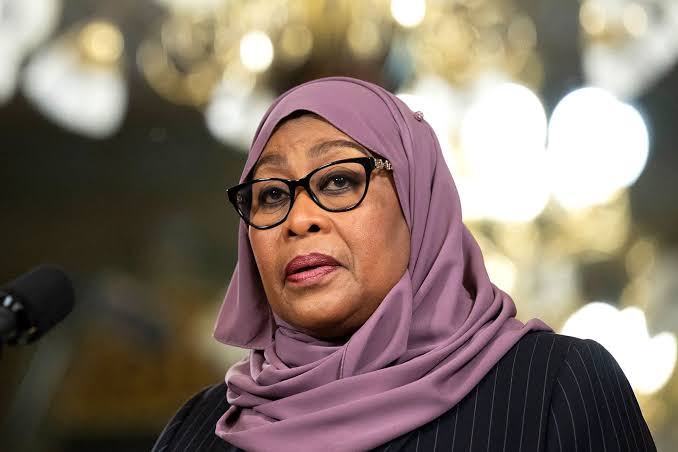
The strategy has become particularly visible in Tanzania’s recent diplomatic outreach. The government has strengthened ties with traditional Western partners while simultaneously deepening engagement with countries such as Russia, China, India, Turkey and Gulf states. Officials argue that economic development is best served by maintaining multiple channels of cooperation rather than becoming dependent on a single bloc.
That approach is rooted in Tanzania’s history.
Under founding President Julius Nyerere, Tanzania became an influential member of the Non-Aligned Movement during the Cold War. The country sought to maintain constructive relationships with competing global powers while preserving its political independence. Although the international environment has changed dramatically since then, many of the underlying principles continue to shape Tanzanian diplomacy today.
Economic considerations are driving much of the current strategy. Tanzania has ambitious plans to accelerate industrialization, expand infrastructure, increase energy production and develop its natural resources sector. Achieving those goals requires substantial foreign investment, technology transfer and access to international markets. By cultivating a wide range of partnerships, policymakers hope to broaden the pool of potential investors and reduce vulnerability to external political pressures.
The country’s growing appeal is supported by a combination of political stability, strategic geography and natural resource wealth. Tanzania occupies a critical position on the Indian Ocean, serving as a gateway to several landlocked African countries. It also possesses significant reserves of natural gas, gold, graphite, nickel and other minerals that are increasingly important to global supply chains. These advantages have attracted attention from investors seeking opportunities in energy, mining, logistics and manufacturing.
Recent engagement with Russia illustrates the logic behind the policy. Tanzanian officials have expressed interest in securing billions of dollars in new investment and commercial agreements while emphasizing that cooperation with Moscow does not come at the expense of relationships with Western partners. Instead, the government presents these engagements as part of a broader effort to diversify economic ties and strengthen resilience in an unpredictable global economy.
The approach mirrors a wider trend across Africa. Governments throughout the continent are increasingly pursuing what analysts describe as multipolar diplomacy, engaging with multiple global powers simultaneously rather than aligning exclusively with one side. The objective is not ideological. It is pragmatic. Countries are seeking investment, infrastructure, technology and trade opportunities wherever they can find them while maintaining as much strategic flexibility as possible.
For Tanzania, the stakes are significant. The country is implementing major infrastructure projects, including railway expansions, port upgrades and energy developments designed to support long-term economic growth. Success will depend in part on the government’s ability to attract sustained international investment and build partnerships capable of supporting those ambitions.
Challenges remain. Managing relationships with competing global powers requires diplomatic balance, particularly as geopolitical tensions become more pronounced. Tanzania must also ensure that foreign partnerships translate into tangible economic benefits, including job creation, technology transfer and industrial development. Diversification alone is not enough if investment fails to generate meaningful gains for citizens.
Still, Tanzania’s leaders appear convinced that engagement offers more advantages than alignment. In a world increasingly defined by geopolitical competition, the country is betting that maintaining multiple partnerships will provide greater economic flexibility and strategic autonomy.
The result is a foreign policy that is neither East nor West, but distinctly Tanzanian. By pursuing cooperation across political and economic divides, the country hopes to position itself as one of Africa’s most connected and investment-friendly economies while retaining the independence that has long been a defining feature of its diplomacy.
