
The initiative forms part of Egypt’s broader strategy to transform itself into a regional center for manufacturing, logistics and export-oriented industrial development.
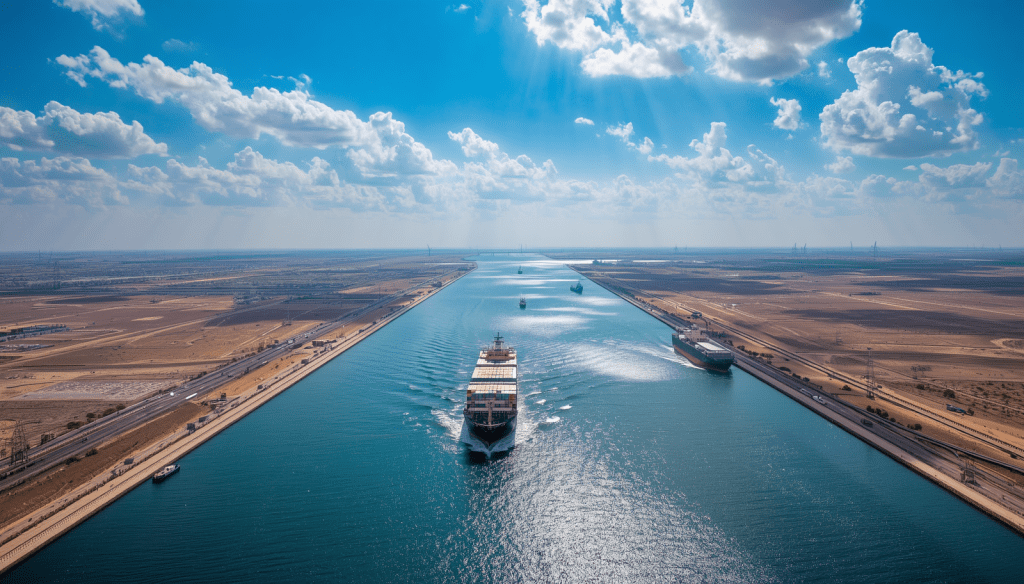
At the heart of that vision is the Suez Canal Economic Zone, a rapidly expanding industrial and logistics corridor surrounding one of the world’s most important maritime trade routes. The zone has attracted billions of dollars in investment over the past decade as Egypt seeks to capture a larger share of global supply chains and move beyond its traditional role as a transit economy.
Egyptian officials have increasingly emphasized that the country’s value proposition extends well beyond its domestic market of more than 110 million people.
Through agreements including the African Continental Free Trade Area, the Common Market for Eastern and Southern Africa, and trade partnerships with Europe and Arab markets, manufacturers operating in Egypt can access a vast network of international consumers under preferential trade arrangements. This market reach has become a central element of Cairo’s efforts to attract foreign direct investment.
For South Korean companies, the proposition arrives at a time when global manufacturers are reassessing supply chains in response to geopolitical uncertainty, rising production costs and shifting trade patterns.
South Korea is home to some of the world’s leading industrial firms in sectors including electronics, automotive manufacturing, battery production, shipbuilding and advanced technology. As these companies seek new production bases and greater access to emerging markets, Egypt is positioning itself as a competitive alternative for export-oriented investment.
The growing engagement also reflects the strengthening economic relationship between Africa and South Korea.
In recent years, Seoul has expanded its diplomatic and commercial outreach across the continent, viewing Africa as an increasingly important partner in areas such as manufacturing, infrastructure, energy and critical minerals. The Korea-Africa Summit held in 2024 marked a significant milestone in that effort, resulting in new commitments aimed at deepening trade and investment ties.
For Egypt, attracting South Korean investment is closely tied to broader economic priorities.
The government has placed significant emphasis on expanding industrial output, increasing exports and creating higher-value employment opportunities. Officials have repeatedly argued that foreign investment should support local manufacturing capacity, technology transfer and long-term industrial development rather than serving solely as a source of capital.
The Suez Canal Economic Zone has become a focal point of that strategy.
Stretching across several industrial districts and ports, the zone is designed to serve as a manufacturing and logistics platform linking Asian, European and African markets. Investments in transportation infrastructure, port expansion and industrial facilities have sought to position the corridor as one of the region’s leading destinations for international manufacturers.
The timing may prove advantageous.
As companies around the world seek to diversify production networks and reduce concentration risks, countries offering strategic locations, trade access and competitive operating environments are increasingly attracting attention from global investors.
For Egypt, the objective is clear: to leverage its geographic position and expanding infrastructure to become a central node in global trade and manufacturing.
For South Korean firms, the opportunity lies in gaining a foothold at the crossroads of multiple markets at a time when access, resilience and diversification have become defining priorities of international business strategy.
The success of that partnership could further strengthen Egypt’s ambitions to emerge as one of the leading industrial and logistics hubs connecting Africa, Asia and Europe in the decades ahead.
