
In meetings held in the Burkinabe capital, leaders discussed the proposed cooperation with a senior Russian cosmonaut and diplomatic officials, emphasizing goals that go beyond simple telecommunications. They said the satellite could support not only expanded internet coverage in underserved rural areas but also encrypted communications for governance, security coordination and even remote sensing applications.
For the three governments, the project represents both a technological leap and a symbol of greater autonomy. Much of the Sahel remains poorly connected because of the high cost of laying fiber-optic cable and the logistical challenges of traditional infrastructure. A satellite could help fill that gap, enabling broader access to education, economic services, and digital government platforms.
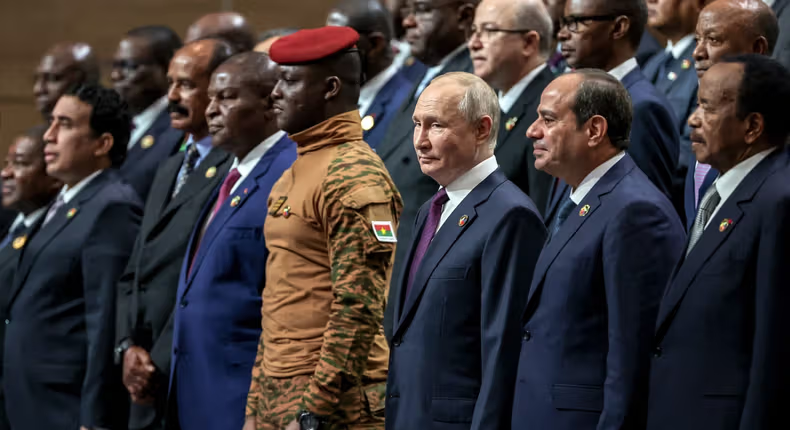
But the initiative also underscores a broader geopolitical shift. Burkina Faso, Mali and Niger, all ruled by military governments that seized power in coups over the past several years, have cultivated closer ties with Moscow even as relations with Western nations have cooled, a trend that analysts say reflects dissatisfaction with traditional development partners and a desire to diversify alliances.
Russia’s involvement in the Sahel has drawn scrutiny from observers, who view the satellite effort as part of a larger pattern of expanding influence across Africa. Moscow has deployed military advisers, negotiated mining and energy partnerships, and offered diplomatic support in the region. Critics caution that deepening ties with a global power whose own space and defense sectors are tightly interwoven with state interests could raise questions about long-term governance and strategic autonomy.
Still, regional officials argue that enhanced digital infrastructure is critical to their countries’ economic futures. By pooling resources and partnering with external technological providers, they say, the three-nation alliance can overcome structural hurdles that have long hindered digital inclusion and economic integration across the Sahel.
As planning continues, the success of the project will hinge on financing, technical expertise and the political will to balance national priorities with regional cooperation, challenges that have accompanied every major initiative undertaken by the Alliance of Sahel States since its formation.
