
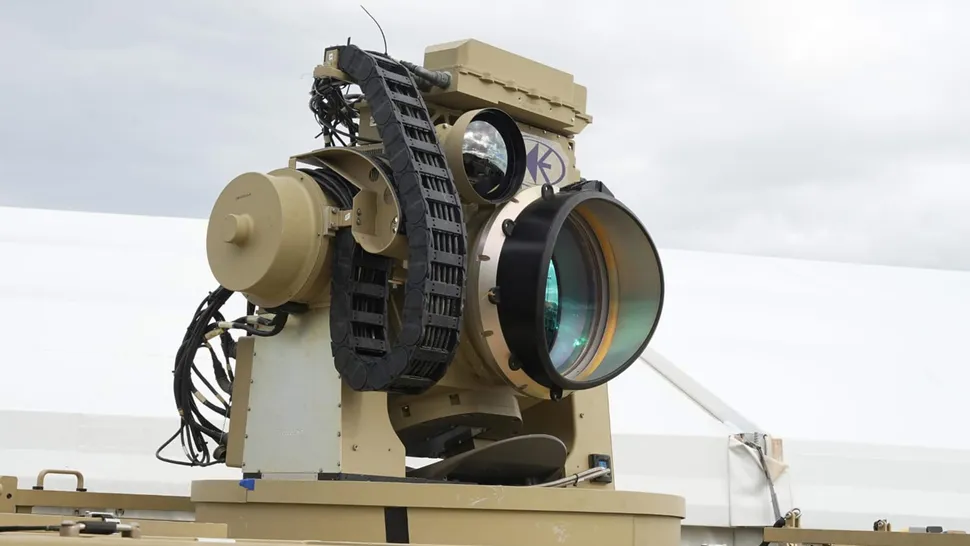
At a ceremony marking the handover to the Israeli Air Force in northern Israel, Defense Minister Israel Katz called the deployment “a historic milestone” in the evolution of national defense. Israel’s military plans to integrate Iron Beam into its layered air defense network alongside established systems such as Iron Dome, David’s Sling and the Arrow missile family.
“This is a new era in air defense,” Mr. Katz said, describing the system’s speed and economy as potential game changers in how short-range attacks are countered across the country.
The laser’s operational debut follows extensive testing that Israeli officials say demonstrated successful interceptions against a range of threats. In earlier versions of the technology used on the battlefield, its laser beams reportedly brought down hostile unmanned aerial vehicles in northern Israel.
Unlike kinetic interceptors that require costly and often complex munitions, Iron Beam draws on electricity to create pulses of light that travel at the speed of light and neutralize incoming objects before they reach their targets. Rafael and defense officials have said this feature could dramatically reduce the financial and logistical burdens of defending against swarms of inexpensive drones and short-range projectiles.
The system’s introduction reflects broader trends in military research and development, as countries across the globe pursue directed-energy weapons with the promise of high precision and low marginal cost. While other nations have tested similar technologies, Israel’s deployment appears to be the first in which a large, high-power laser has been fully integrated into an active national defense posture.
Still, military analysts caution that environmental conditions such as dust, rain and atmospheric interference can affect laser performance, and that iron-beam systems are likely to supplement rather than replace conventional interceptors for threats at greater distances or higher altitudes.
As the Iron Beam begins its operational life, defense officials in Jerusalem have signaled their intention to expand its deployment across multiple sites nationwide, underscoring the growing role of innovative technologies in Israel’s strategy to defend against increasingly complex and varied aerial threats.
