
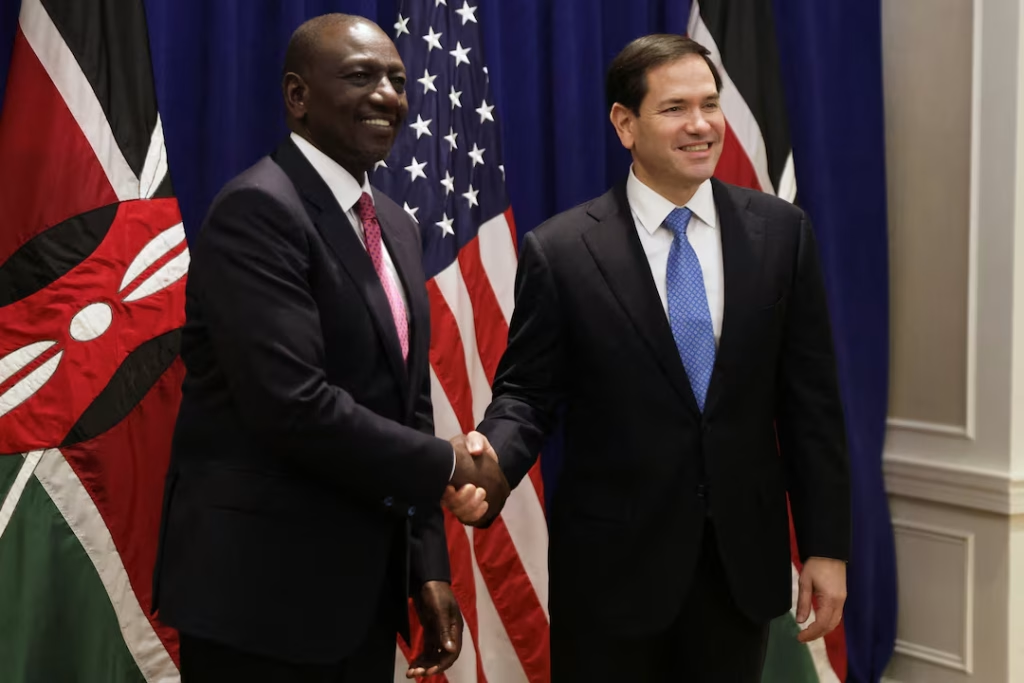
The agreement channels support directly into public health institutions — including the Social Health Authority (SHA), the Kenya Medical Supplies Authority (KEMSA), the Digital Health Agency (DHA), and the National Public Health Institute of Kenya (NPHI).
Officials said the pact is designed to phase out reliance on non-governmental organizations and donor-led channels, directing funding straight to the government to strengthen health infrastructure, workforce, supply chains, and digital health systems — including patient records and data integration.
According to the terms, U.S.-funded health workers will gradually transition to the Kenyan payroll. The plan also includes the procurement and distribution of strategic medical commodities by KEMSA. By 2031, Kenya is expected to assume full responsibility for key health services currently supported by U.S. aid.
In remarks following the signing, Kenyan leaders said the commitment would significantly boost the government’s push toward universal health coverage. U.S. officials, meanwhile, framed the deal as part of a broader shift in foreign aid — one that aims to reduce dependence on donor-driven programs and promote sustainability through domestic health investments.
Critics have cautioned that such sweeping reforms hinge on efficient implementation, transparency, and strong governance, warning that any missteps could jeopardize the delivery of critical services.
Still, supporters argue the deal marks a turning point: a move away from traditional donor aid toward a structured, accountable partnership with long-term impact on Kenya’s health sector and — potentially — a blueprint for other countries.
